Welcome to the blog for the Villanova English department! Visit often for updates on department events, guest speakers, faculty and student accomplishments, and reviews and musings from professors and undergraduates alike.

Showing posts with label summer reading. Show all posts

Monday, May 18, 2026

Summer Reading Recs 2026: Faculty & Staff Recs

Summer Reading Recommendations

Welcome to the English Department's 13th annual summer reading recommendations. Once you've explored this list, you can click on “summer reading” to see recommendations from previous years. Stay tuned for recommendations from members of the Student Advisory Council.


Michelle Filling-Brown


The Emperor of Gladness will have you contemplating what it means to truly live and find joy. The characters ask us to consider family, memory, choice, addiction, pain, empathy, and second chances. Although the novel has moments of deep sadness, the comedic scenes with the crew at HomeMarket, a fictionalized Boston Market-type restaurant featuring cornbread with a secret ingredient, bring warmth and absurdity that beautifully balance the profound darkness.

It’s this mix of heartbreaking generational trauma and ridiculous humor that drew me into this novel. Ocean Vuong’s prose is lyrical and immersive. He writes with such vivid detail that I’m convinced I know what the secret basement library with yellow, brittled books smells like and what it feels like to stomp on dinner rolls in the rain. The novel is haunting and stayed with me long after I finished my time with Hai, Grazina, Sonny, and the crew, reminding me that through human connection we can find happiness even in our lowest moments.

Adrienne Perry


A dear friend sent me Mon Cher Amour: The Love Letters of Albert Camus and Maria Casarès, 1944-1959 for my birthday. Translated from the French by Sandra Smith and Cory Stockwell, the hundreds of letters contained in this massive volume chronicle the life, love, carriers, and milieus of two absolute stars--Camus in the literary and political realm and Cazares as a renowned actor of radio, stage, and screen. I have only begun to read this marvelous book, but can already say it is a stunning, humbling example of the power of letters and correspondence. The letters' honesty and beauty remind me that seeking, reading, correspondence, connection, passion, and introspection can be part of everyday life and that we can wring more out of life through curiosity and feeling. I have long been an admirer of Camus, especially given his writings gathered into Neither Victims Nor Executioners, so I am eager to learn more about him, as well as Casares.


Tsering Wangmo

I’ve been carrying sentences from Arundhati Roy’s Mother Mary Comes To Me in my body months after reading it. The memoir tackles the author’s complicated and painful relationship with her mother, but like Roy’s last novel (The Ministry of Utmost Happiness) this text is also a critique of India under Prime Minister Narendra Modi. I so admire how Roy shows the scars from her childhood while achieving at the same time the reader’s understanding, even admiration, of Mother Mary as an educator and activist in addition to being a formidable mother. It’s Roy’s stunning tribute to her mother.

Last summer a friend from Argentina gave me Tender is The Flesh by Agustina Bazterrica, (translated from the Spanish by Sarah Moses) saying the plot builds around a society where animal meat is no longer edible after a virus outbreak. In an article in the The Irish Times on February 21, 2020, the author writes she wanted to tell a story about a time in the future when cannibalism could be legalised. Incredible plot, right? The novel made my friend think about capitalism, the normalization of cruelty, and language: what is done with words as well as the inadequacy of language in crucial moments. I was intrigued by the book’s effect on my friend and am eager to read the novel.

Mother Mary Comes to Me Roy, Arundhati [Used - Very good] [Hardcover]   Tender Is the Flesh


Mary Mullen

One book that I read and am stilling thinking about is Yasmin Zaher, The Coin. It’s zany and surreal. This story of a Palestinian woman who teaches middle school for underprivileged students and gets involved in a Birkin Bag swindling operation stuck with me both because of what it says about our world and because of the unexpected unfolding of its plot. There are stunning sentences throughout.

I look forward to reading a book I bought on the bookstore expedition: Elizabeth Taylor’s Angel. I enjoy Taylor’s subtle, sharp writing. I picked up this book because I think it is a story of what Jenny Offill calls an "art monster": a writer who prioritizes creativity over mundane responsibilities. What could be better?

Angel by Taylor, Elizabeth by York Review of Books, Paperback


Travis Foster

If you’re looking for something slim and mind-expanding, I highly recommend Emma Heaney’s 2025 This Watery Place: Four Essays on Gestation. Too often, we bury conception, gestation, birth, and infant care under falsifying spectacles. Heaney cuts through all of that by focusing on the knowledge of experience, grounding brilliant insights about reproductive freedom, cisness, and state violence in bodies and their lived reality.

For something completely different, Thomas Mann's Buddenbrooks (1901) is one of the most enjoyable novels I’ve picked up in a long time. It's a 700-page German family saga tracking four generations of a merchant family, and it moves with surprising speed. Mann published this when he was only 26, and it remains easy to see why it then became central to his Nobel Prize. If you pick it up, I recommend the John E. Woods translation, which, I think, beautifully captures the humor and natural dialogue.

This Watery Place: Four Essays on Gestation: Heaney, Emma: 9780745350141: Amazon.com: Books 


Yumi Lee

Kaori Ekuni – Twinkle Twinkle, or 반짝반짝 빛나는


One of my goals this summer is to improve my Korean language reading and writing, and a friend recommended, and lent me, a Korean translation of the Japanese novelist Kaori Ekuni’s Twinkle Twinkle. It’s about a gay man and his female friend who enter into a fake marriage to appease their parents; shenanigans ensue. My friend loved it and thought the translation was also very readable for my level, so I’m excited to give it a try.

Toni Morrison, Song of Solomon

Even as a scholar of 20th and 21st century American literature, and one who’s read, taught, and written about other Morrison novels, I’ve somehow never sat down and read Song of Solomon in its entirety. I started rectifying this shameful error on a recent short trip, and truly, what a treat to get to read a Morrison novel for the first time and luxuriate in the sentences, the imagery, the sensory details (her mind!!). Summer is also a perfect time to start a long book, I think, so I’m excited to get immersed.


Jean Lutes

I'm diving immediately into Tana French's The Keeper (Penguin Random House, 2026), the final book in her crime-novel trilogy featuring a retired Chicago detective in rural Ireland. French's atmospheric, subtle narratives always remind me of my mother, a devoutly Catholic daughter of Irish immigrants who was a devoted fan of the television police procedural. Then I'll reread Charles Dickens' Bleak House, a doorstopper of a Victorian novel that I've been wanting to revisit, partly because of its irresistible depiction of a legal system that perverts justice. After that, two books by colleagues (one about-to-be, the other longstanding) are at the top of my list.

First, I'll return to a book of poetry I encountered and appreciated, but lacked time to savor, during the bustle of the school year: Emily Skillings' Tantrums in Air (The Song Cave, 2025). Emily will join our department this coming fall, and before she arrives in person in August, I'm looking forward to spending more time with her poetry, which I find riveting: joyful, deep, funny, and pomposity-free. Then I'll reread Alice Dailey's Mother of Stories: An Elegy (Fordham University Press, 2024), a lyrical, challenging memoir about motherhood and stories. In recent years, it has been a thrill — and a reminder of the varied, always-emerging talents of our English department faculty — to watch Alice, a highly accomplished literary critic who taught in our department for many years, begin publishing creative nonfiction. This particular bit of summer reading is really cheating, however, since I'm teaching a course in Fall 2026 on Fictions of Motherhood, and I'll cite some of Alice's work in my class.

The Keeper by French, Tana by Random House Large Print Publishing, Paperback  Mother of Stories: An Elegy


Megan Quigley

Three Guineas by Virginia Woolf

This summer I am beginning by reading Woolf’s most overtly political essay, she maintains that war, patriarchy, and political institutions are intrinsically linked. In my two Woolf classes we read her fictional novels and memoirs (wonderful!) but I think perhaps we need to take off the gloves and read the polemics next time! So I want to re-read this work and look at why she decided to include photographs. I also will read Flush, her biography of a dog, for a bit more light-hearted fun.

Orbital by Samantha Harvey

Booker prize-winning lyrical novel about the experience of memory, time, and love when in orbit. I’ve been eager to read.

Three Guineas: The Virginia Woolf Library Authorized Edition    Orbital bookcover


Joe Drury

I just tore through Patrick Radden Keefe’s new book, London Falling. It’s a masterful, gripping exploration of the financial-criminal complex that has transformed London over the last three decades and explains much of the world we now live in, though it starts out as an investigation into the mysterious death of 19-year-old Zac Brettler, who fell from the balcony of a luxury apartment building overlooking the Thames in 2019. After his death, his parents learned that he had been living a secret life pretending to be the son of a Russian oligarch. It’s a remarkable story with an astonishing cast of Trumpian grifters, mobsters, and confidence men, told with a Dickensian eye for the corruption and cruelty hiding beneath the city’s glittering surfaces. If you like this book, you will also enjoy Reefe's astonishing Say Nothing, another utterly enthralling investigation of a mysterious death, this time in Belfast, Northern Ireland in the 1970s, that turns into a complex, exhilarating exploration of the history of the IRA, the Troubles, and the legacy of British imperialism in Ireland. Warning: Keefe’s books will make you put off all the other things you have to do until you've finished reading them!

London Falling: A Mysterious Death in a Gilded City and a Family's Search for Truth Say Nothing by Patrick Radden Keefe ...

Lora Novak

I have three selections that our ladies' book club enjoyed:
1. These Precious Days by Ann Patchett
2. The Correspondent by Virginia Evans
3. Tell Me Everything by Elizabeth Strout


These Precious Days: Essays


Kimberly Takahata

With the 250th anniversary of the Declaration of Independence coming up in July, I've been thinking a lot about what the "early Americas" can teach us about our present moment, especially as the subject of contemporary reimaginings. I'll be diving into Laila Lalami's novel The Moor's Account this summer, which tells the story of Mustafa al-Zamori, an enslaved man called Esteban in Spanish agent Álvar Núñez Cabeza de Vaca's 1542 account of an expedition through what is now the US south. They were two of only four men who survived. This book promises to help us reflect on the kinds of stories that survive across centuries and all the stories we still might discover.


Cathy Staples


I am always on the search for new books exploring our relationship with nature so one new book I am hoping to read is Michael Symmons Roberts' Dog Star. The publisher’s description is enticing: “Dog Star is a book of linked poems rooted in encounters with real, imagined or mythical birds, trees, fish, flowers, bacteria, chimeras – ancient connections reshaped by technological and political change and critically endangered by species and habitat loss.” I love the work of his I've seen online. Here's an excerpt from a poem from the Poetry Foundation website. If "Mapping the Genome: is not in his new book, I'll be ordering another one of his books!  


Somewhere out there are remnants

of our evolution, genes for how


to fly south, sense a storm,

hunt at night, how to harden

your flesh into hide or scales.


These are the miles of dead code.

Every desert has them......


Mike Malloy

I thought I’d recommend two very different books for summer reading: one long and cosmic, the other short and parochial.


 The long one even has a long title: The Day Lasts More than a Hundred Years, by Chingiz Aitmatov. Aitmatov was a Kyrgyz-Soviet writer who published this book in Russian in the 1980s, but it’s available in a very readable English translation by F.J. French. The story takes place over a single day and follows two narrative threads, one about a Kazakh man trying to bury his friend in a traditional manner, the other about a joint US-Soviet encounter with an extraterrestrial intelligence in outer space. The way these two narratives intersect, echo, and rhyme is deeply interesting, and the poetic evocation of the Kazakh steppe (and outer space!) is powerful.


The short one is also a translation into English, this one from Irish, and it’s Pádraig Ó Siochfhradha’s Jimeen (translated by Íde ní Laoghaire and Peter Fallon). This is a slice-of-life coming-of-age tale about a boy in the Munster Gaeltacht who gets into various silly scrapes and relates his adventures with a distinctive Huck Finn-esque narrative voice. It’s mostly light fun, but it builds to a surprisingly emotional conclusion as you realize the narrator has been growing up, almost imperceptibly, the whole time.


Amanda Eliades

So far, 2026 has been a great year of new releases for me and I am having the best time reading a lot of brand-new books! I have two recommendations and two hopefuls for this summer. Everyone has been talking about The Correspondent by Virginia Evans for such good reason. This is a wonderful epistolary novel about a retired lawyer who communicates with people in her life (and Joan Didion!) via beautiful (and funny) letters. This one made me laugh and cry, my favorite type of novel! I also loved Lady Tremaine by Rachel Hochhauser, a sort of Cinderella retelling from the stepmother’s perspective. I love fairytale retellings and this one does not disappoint. Female rage abounds!

I’m looking forward to reading Yesteryear by Caro Clarire Burke this summer. You can’t go into any bookstore or talk to a bookseller nowadays without hearing about this one. The main character is a “tradwife” influencer who wakes up in the 1800s and is forced to live the life she’s been sort of selling online. I am so intrigued by this one and can’t wait to see if I love it as much as everyone else has been lately. I’d also like to get to Thistlemarsh by Moorea Corrigan which takes place in a rundown cottage in the English countryside. The cottage may or may not be haunted, I think? I can’t wait to find out!

The Correspondent - by Virginia Evans (Hardcover) Yesteryear: A GMA Book Club Pick: A Novel


Alan Drew

We just had Alvaro Enrigue and his translator, Natasha Wimmer, here at Villanova for the 2026 Literary Festival. I loved his last book, You Dreamed of Empires, which is set in 1519 Tenochtitlan on the eve of the Spanish destruction of the Aztec and the larger Mexica civilization. It's a mind trip of a book which seeks to reimagine the fateful encounter between Cortez and Moctezuma amid a haze of magic mushrooms. (As I said, it's a trip.) This book, Now I Surrender, is also historical fiction, set in the 19th Century borderlands of Mexico and the United States as both countries' armies try to battle Geronimo and his band of Apache into surrender. Magic mushrooms or not, I'm sure this book will be a wild trip, too, that makes us rethink the histories we think we know.


Kamran Javadizadeh

Over the last year or so, I have become kind of obsessed with Solvej Balle’s On the Calculation of Volume. It’s a Danish novel that is being published in seven installments—the English translation of the Book IV came out this April, and Book V is due in October—and I think of it as a cross between Virginia Woolf’s Mrs. Dalloway and the Bill Murray movie Groundhog Day. The novel takes the form of the diary of a woman named Tara Selter, a rare book dealer, who has become “stuck” in a single day, November 18. It’s hard to describe. Because on the one hand very little happens, or rather very little can happen, since anything that does happen seems to get reset to nothing by the next day, the next November 18. But on the other hand, because Tara’s understanding of what is (or isn’t!) happening to her, and to the world she inhabits, grows and deepens, as the day keeps repeating, and as she learns what the “rules” of the repetition seem to be, the most minor variations begin to acquire this magical and sometimes even shocking quality. I’m currently reading Book IV, and, without giving anything away, I can say that things do happen in this world, and that Balle has written a high-concept, literary novel that also manages to be a page turner, one that makes its reader aware, again and again, of the strange temporal experience of reading itself.


Lara Rutherford-Morrison

I just finished reading Annihilation by Jeff VanderMeer and highly recommend it if you enjoy unreliable narrators, sentient fungus, and worldbuilding that is both beautiful and extremely creepy. I’m also recommending the podcast LeVar Burton Reads, in which LeVar Burton reads short stories, mostly (but not exclusively) science fiction and fantasy, from a diverse range of authors. The back catalogue includes works by well-known authors like Kurt Vonnegut, Louise Erdrich, and N.K. Jemisin, as well as new stories by up-and-coming writers. I’ve discovered several authors I really enjoy while walking my neighborhood and listening to Burton’s wonderful voice.


Monday, May 5, 2025

Summer Reading Recommendations

Welcome to the English Department's 12th annual summer reading recommendations. Once you've explored this list, you can click on "summer reading" to see recommendations from previous years. Stay tuned for recommendations from members of the Student Advisory Council.

Yumi Lee
1. Tsering Wangmo Dhompa, The Politics of Sorrow: Unity and Allegiance Across Tibetan Exile: I’ve just gotten started on this fascinating, brilliant, beautifully composed book by our very own Tsering Wangmo. It’s about broad topics I think about quite a lot – nationalism, modernity, exile, citizenship – as they come up in a history I’ve always wanted to learn more about, which is the history of Tibet and its diaspora. I can’t wait to read and learn more this summer.

2. Victoria Chang, With My Back to the World: I saw Victoria Chang give a reading that included some poems from this book at this past year’s Literary Festival, and I immediately put this book on my list. It’s a book of poems that engage with the artwork of the painter Agnes Martin, who is one of my favorites (I have a postcard of one of her paintings pinned to the bulletin board outside of my office, just because it makes me feel happy to look at it every day!). I’ve always been interested in the relationship between writing and different forms of art as they communicate human experiences and emotions, so I’m excited to get to take the time to read these poems this summer.


Cathy Staples
I have long been enchanted by British nature writer Robert Macfarlane. He writes beautifully about landscapes, mountains and underworlds in The Wild Places, The Old Ways, Underworld, and Landmarks.  I am looking forward to reading his new book in which he considers the sentient living qualities of rivers—Is the River Alive? I have read that his lyric and precise prose style shifts in this new book, the descriptions sound almost like rushing currents—without full stops. Somehow, I imagine I will find myself rereading another watery and haunting favorite Alice Oswald's Dart.


Craig Carpenter

I find myself returning to psychologically complex narratives. Two very different novels are pulling me back to them. One is Patricia Highsmith's The Talented Mr. Ripley. It is an engrossing, edgy narrative that recalls Dostoevsky's Crime and Punishment because of the main character's cognitive and emotional state and processes. There is plenty of plot, but that is not where the real action is. As a window into human consciousness, Highsmith's tale of frustrated identity and the pursuit of exciting, liberating possibilities remains riveting. 


Very different is Cormac McCarthy's Suttree. It is not only much longer; it is not as organizationally tight. Both features, however, serve the narrative function well in this pivotal novel in McCarthy's ouevre. It is at once the most humorous of his novels and among the bleakest, yet that mixture is part of what McCarthy is able to capture so masterfully about ordinary human life at the margins of society, particularly individuals and communities mired in abject poverty. Somehow beauty emerges from the pathos.


Jean Lutes

I’ll kick off my summer with a witch hunt: Arthur Miller’s The Crucible, a 1953 play that dramatizes the Salem witch trials. My 14-year-old daughter and I will read the play together to prepare for a trip to New York to see a celebrated new play inspired by Miller’s classic. The Crucible used the witch trials of the 1690s as an allegory for the political situation of the early 1950s, when Senator Joseph McCarthy’s vicious rhetoric spread fear and suspicion across the nation, fueling anti-Communist hysteria and the political persecution of leftist thinkers. In most interpretations of The Crucible, the character of John Proctor, a married farmer accused by a teenage girl of witchcraft, is seen as the play’s hero. But in Bellflower’s new play John Proctor is the Villain, starring Sadie Sink, a group of teenage girls read The Crucible in a high school English class in 2018 and come to very different conclusions. Set in aftermath of the #MeToo movement and deeply resonant with the attacks on free speech and due process we have seen in the first few months of 2025, Bellflower’s play feels unmissable; it has so much to say about girlhood, lies, and political and sexual violence. And, of course, it’s about an English class, so it has to be good.


Mary Mullen

I bought the last copy of Dionne Brand's Salvage: Readings from the Wreck at Main Point Books during the English department's annual bookstore expedition and can't wait to read it. The book combines personal narrative with literary criticism to reflect on a lifetime of reading and writing and salvage what can be from literature entangled with empire, racism, and slavery. I enjoyed Brand's interview on Between the Covers podcast and appreciate her poetry so I have a hunch I'll like this book.


Heather Hicks
Two books I’ve read recently that I recommend are HG Wells’s 1901 science fiction classic First Men in the Moon and Kim Stanley Robinson’s recent climate fiction opus New York 2140.  I recommend the Wells novel both because it is a weird, fun read by a brilliant storyteller and because it served as a reminder for me of how rewarding it is to read more and more by the writers we most admire.  Perhaps it is obvious, but if you like a novel by a writer, it is a real adventure to read everything they’ve written, including their “lesser” works!  Robinson, like Wells before him, has written an enormous number of science fiction books, but New York 2140 is one of my favorites.  It is a detailed and realistic— yet still very hopeful—portrait of how climate change will likely change the world by the twenty-second century. 


Travis Foster

I loved At Swim, Two Boys by Jamie O’Neill. It’s set in Dublin around the time of the 1916 Easter Uprising and centers on two teenage boys: quiet, thoughtful Jim Mack and bold, fiery Doyler Doyle. They make a pact to swim to a distant rock on Easter, and as they train together, their friendship deepens into love. The story totally pulled me in, and the emotional weight of it left me reeling.


Crystal Lucky

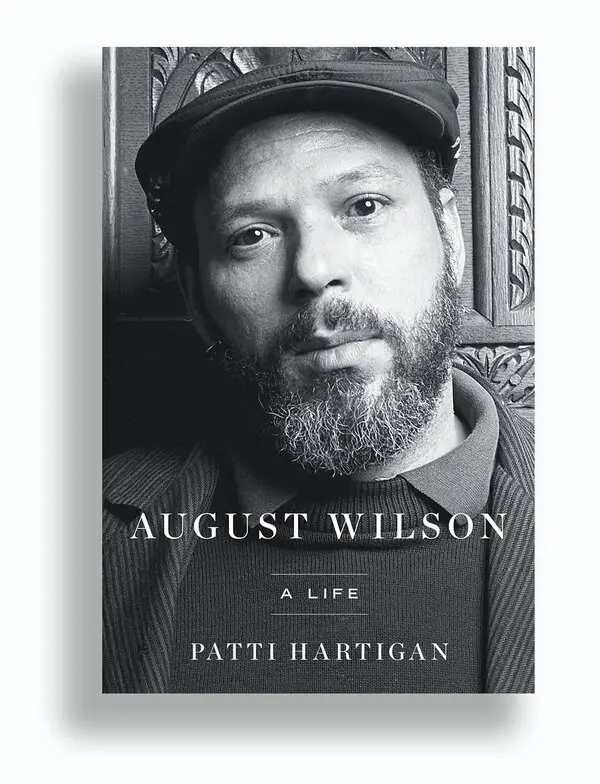
I would like to suggest two books for summer reading: The Water Dancer by Ta-Nehisi Coates and August Wilson: A Life by Patti Hartigan. The former is an intriguing novel that incorporates the beauty of magical realism, the familiarity of folklore, and the intensity of Coates' ability to gaze at America's fraught relationship with slavery, race, and progress. The latter is an exciting authoritative biography of one of America's most important playwrights written by an engaging storyteller. 


Evan Radcliffe
I’m recommending James McBride’s 2023 novel The Heaven & Earth Grocery Store. It’s set in the 1920s and 1930s in Pottstown, Pa (under 30 miles from Villanova), and focuses mostly on its Black and Jewish communities.  It details the prejudices those communities face, but, along with sharp observations, it’s full of solidarity and humor. (James McBride was part of our Literary Festival in 2015.)


Michelle-Filling Brown
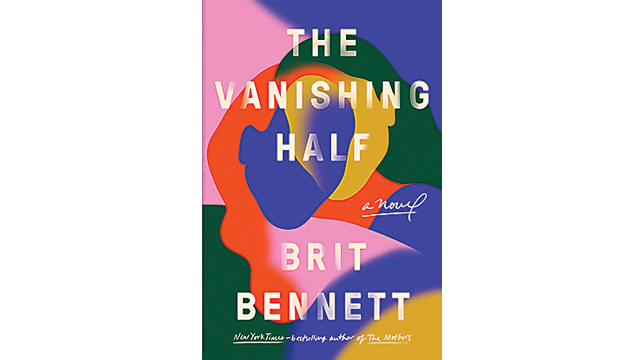
I would recommend The Vanishing Half by Brit Bennett as a summer read.  At its heart, the novel explores identity, family, race, and the choices that shape our lives—all themes that resonate deeply and are told through compelling characters and a page-turning plot. It’s the kind of book that makes you think long after you've finished it and also one that you can breeze through by the pool or on a beach.


James: A Novel by Percival Everett is next on my personal summer reading list. One of my friends from college just read it and said she needed to talk about it.  After a recent conversation with one of our graduating Master's students, I'm convinced that we should read in community! 


Megan Quigley

I’d already read one of the banned and then unbanned graphic novels at our local public high school (Fun Home, by Allison Bechdel-- go read it if you haven’t!) but I hadn’t read Gender Queer by Maia Kobabe so I will! I love the poetry of W. H. Auden and I’m excited about Nick Jenkin’s new biography, The Island, which I received for Christmas. How will it change our understanding of Auden’s early verse? I’ve read The Iliad, but not Emily Wilson’s translation! Oreo, by Fran Ross, is a 1974 riff on Ulysses telling the story of a half-Black, half Jewish narrator on a quest to find her father. Supposedly laugh out loud funny (as well as experimental in form, etc.)!  Finally, my children and I are going to read Solito, by Javier Zamora, a memoir about a nine-year old boy’s migration from El Salvador to the US together.


Lara Rutherford-Morrison
My recommendation for summer reading is the Binti trilogy by Nnedi Okorafor. Binti, the first in the series, is an Africanfuturist novella about a young Himba woman who finds adventure while en route to a prestigious intergalactic university. It’s a compelling, entertaining coming-of-age story about personal transformation, finding strength in heritage, and learning to communicate with the “other.”


Lauren Shohet
Last summer, one of my favorite reads was Daniel Jose Older's Ballad & Dagger, a kind of Afro-futurist fantasy novel about a community with diasporic Latin, African, and Jewish roots, facing environmental crisis. 


This summer, I'm looking forward to Adam Nicolson's brand new Bird School: A Beginner in the Wood, which meditates on what we learn when we get to know the birds around us. 


Joe Drury
I’m continuing my recent trend of recommending short comic novels and going with Ben Lerner’s Leaving the Atocha Station. This is a book for anyone who has spent a semester abroad. The narrator is a hapless American poet in his early 20s living in Madrid on some kind of Fulbright-esque fellowship. He spends his days smoking weed and reading Russian novels, occasionally venturing out of his apartment to engage in awkward social interactions using his very shaky Spanish. Witty and well observed, the running joke in which he describes the range of things that the people he is speaking might be saying to him is wonderfully original and sublimely funny.

Amanda Eliades
I’m excited to curl up with quite a few books this summer, both some brand-new fiction and some that have been on my radar for a little bit! I’m hoping to get to Same As it Ever Was by Claire Lombardo this summer. I really loved her first novel, The Most Fun We Ever Had – both novels examine complicated family relationships and slice-of-life observations across generations in a single family. I love her writing, and this is a long book I’ll have time to sink my teeth into! Frederik Backman’s new book My Friends is coming out this May and I can’t wait to read that one as well. I really loved Anxious People which I’ve just discovered was made into a Netflix series! Finally, I look forward to some armchair traveling with Janice MacLeod’s Paris Letters (a memoir about a woman who faces burnout and decides to escape to Paris and learn to live slowly) and Aimie K. Runyan’s The Wandering Season (historical fiction about a specialty food broker going on a trip across Europe to learn about her ancestry).

Von Wise ii

I highly recommend two books by Moriel Rothman-Zecher, Sadness is a White Bird and Before All the World. Each of these books has a lot to say regarding the current political climate, though they tell very different stories.


Sadness is a White Bird examines the Israel-Palestine conflict from the perspective of a young man who grows up in the midst of the tensions and finds himself drawn to the Palestinian resistance even as he attempts to fulfill what he sees as his ancestral obligations. Published in 2018, it is a moving exploration of the circumstances that led into the current crisis in the region.


Before All the World is more experimental historical fiction, taking place alternately between the fictional village of Zatelsk and 1930s Philadelphia. The book is a supposed translation of one of the character’s accounts of the pogrom that destroyed her village and the subsequent survival of the only two to make it out. They make their magical-realist ways over to America, and don’t necessarily find a better world. I’m a sucker for experimental uses of language, and the “translation” stays very close to its “roots,” reading and sounding and thinking in two languages (English and Yiddish) simultaneously. It is linguistically impressive, but above all, it is a story of survival in a hostile world and perseverance and self-preservation in the face of that ever-present hostility.


Both books are emotionally compelling and deal with challenging topics and circumstances by focusing on the people who find themselves living within them. They are the best kinds of books for living in a world that feels like it is spinning out of control.


Adrienne Perry
I recently picked up The Possessed, by the Polish author Witold Gombrowicz and translated by Antonia Lloyd-Jones. Published in 1939, the novel was originally serialized in newspapers, and it is a wild ride. Haunted, dilapidated castles complete with twerking hand towels and aging, mad princes. Secretaries scheming to inherit antique treasures. A young, dashing tennis coach hired to help a talented young woman sharpen her game at a countryside retreat. Hot and cold potential lovers. The Possessed is a fun page-turner from an internationally celebrated author less familiar to English-speaking audiences. 


Tsering Wangmo Dhompa
I began reading Kaveh Akbar’s novel Martyr! in late December and could not return to it when the spring semester began. The plan is to get back to Martyr! I have two other books on my reading list about places (Palestine and Tibet) that are connected in their struggle for justice and liberation: Susan Abulhawa's Against the Loveless World (a novel) and Jamyang Norbu’s 962-pages “memory history,” Echoes from Forgotten Mountains: Tibet in War and Peace.


Joseph Lennon
Having finished Cauvery Madhavan’s The Inheritance (2024), set in the past and present of the Beara peninsula in Ireland, I’m now turning to her The Tainted (2020) and Uncoupled (2002) this summer.  Her first novel, Paddy Indian (2001), brought Cauvery international attention as a writer exploring migrancy issues in Europe and Ireland in particular.  Tainted is about the Connaught Rangers, Irish soldiers in British India who mutinied in 1920 during the Anglo-Irish war.  It also is about the children of Indian women and British and Irish men who were not accepted by either communities.  Also, Cauvery is going to be our 2026 Heimbold Chair so she’ll be on campus next year to meet with English, Irish Studies, and Creative Writing students!