Villanova English issued the following statement on Instagram in response to the Black at Villanova University account:
"The English Department urges all Villanovans to read the stories being shared on the @blackvillanova account, including posts that call out the English Department for instances of racism. We are listening, and we are committed to taking action to combat racism and white supremacy in our department and across campus."
Thursday, June 25, 2020
Wednesday, June 17, 2020
Dr. Adrienne Perry wins Elizabeth Alexander Creative Writing Award
The judges added: "The Elizabeth Alexander Creative Writing Awards celebrates "an author whose work embodies the lyrically powerful and historically engaged nature of Dr. Alexander's writing. The award aims to highlight different forms of knowledge production that emerge from the artistic, political and cultural advocacy for transformative change undertaken by women of color nationally, transnationally, and globally. Our goal is to make knowledge production by and about women of color central to contemporary definitions of feminisms in the explorations of women's economic conditions, cultures, sexualities, as well as the forms and meanings of resistance and activist strategies."


Monday, June 15, 2020
Just Published: Dr. Yumi Lee on Police Violence in Toni Morrison's Home
Congratulations to Dr. Yumi Lee, whose article, "Repairing Police Action after the Korean War in Toni Morrison's Home," was just published in the journal Radical History Review.
Dr. Lee's timely essay looks at the way Toni Morrison's 2012 novel Home links the violence of US military “police action” in Korea in the early 1950s to the long history of police violence at home. She argues that the novel's critical portrayal of the Korean War punctures two enduring myths with origins in the 1950s: the myth of a peaceful domestic “color-blind” society and the myth of heroic US military intervention abroad. In Dr. Lee's reading, Home is an allegory that invites readers to imagine forms of justice outside of a policing framework, both globally and domestically, through its narrative of repairing trauma and harm through community care rather than punishment or retribution. Morrison’s rewriting of the 1950s in Home therefore places the contemporary idioms of police and prison abolition and transformative justice in a broader historical and global imaginative frame.

Dr. Lee's timely essay looks at the way Toni Morrison's 2012 novel Home links the violence of US military “police action” in Korea in the early 1950s to the long history of police violence at home. She argues that the novel's critical portrayal of the Korean War punctures two enduring myths with origins in the 1950s: the myth of a peaceful domestic “color-blind” society and the myth of heroic US military intervention abroad. In Dr. Lee's reading, Home is an allegory that invites readers to imagine forms of justice outside of a policing framework, both globally and domestically, through its narrative of repairing trauma and harm through community care rather than punishment or retribution. Morrison’s rewriting of the 1950s in Home therefore places the contemporary idioms of police and prison abolition and transformative justice in a broader historical and global imaginative frame.
Want to Learn More about Black Lives Matter? Villanova English Faculty Reading Recommendations
The Villanova English Department stands in solidarity with our Black students, staff, and faculty and their allies against anti-Black racism, police violence, and racial injustice.
The faculty intend to contact students with an action plan before the fall semester begins, and we will be asking for student input as we proceed. In the meantime, if you have specific suggestions or questions about our department response, please direct them to Dr. Jean Lutes, chair of our department Diversity, Equity, and Inclusion committee, at jean.lutes@villanova.edu.
![By Claudia Rankine ] Citizen: An American Lyric (Paperback)【2018 ...](https://images-na.ssl-images-amazon.com/images/I/31nyDozq0HL._SX331_BO1,204,203,200_.jpg)
And, to help make sense of all of this reading, a short essay, “What is an Anti-Racist Reading List For?” by Dr. Lauren Michele Jackson: https://www.vulture.com/2020/06/anti-racist-reading-lists-what-are-they-for.html
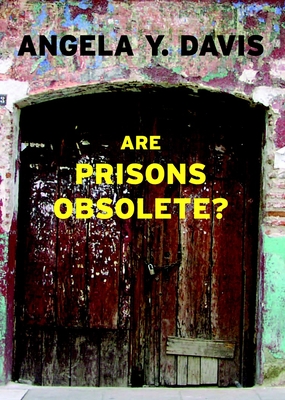
As a first step in our response to the rising Black Lives Matter movement, we invite you to consider this reading list on white supremacy, policing, and racial justice:
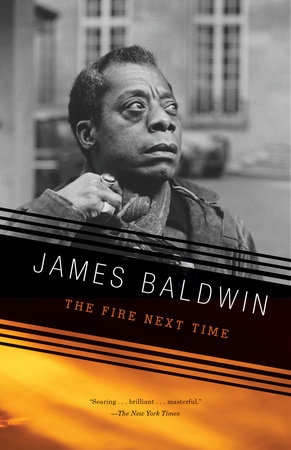
- James Baldwin, The Fire Next Time (1963) [available online via Falvey Library], and Raoul Peck’s 2018 documentary I Am Not Your Negro [available for purchase on Youtube and Amazon prime video]
- Claudia Rankine, Citizen (2014) -- Rankine read at Villanova during the 2019 Literary Festival
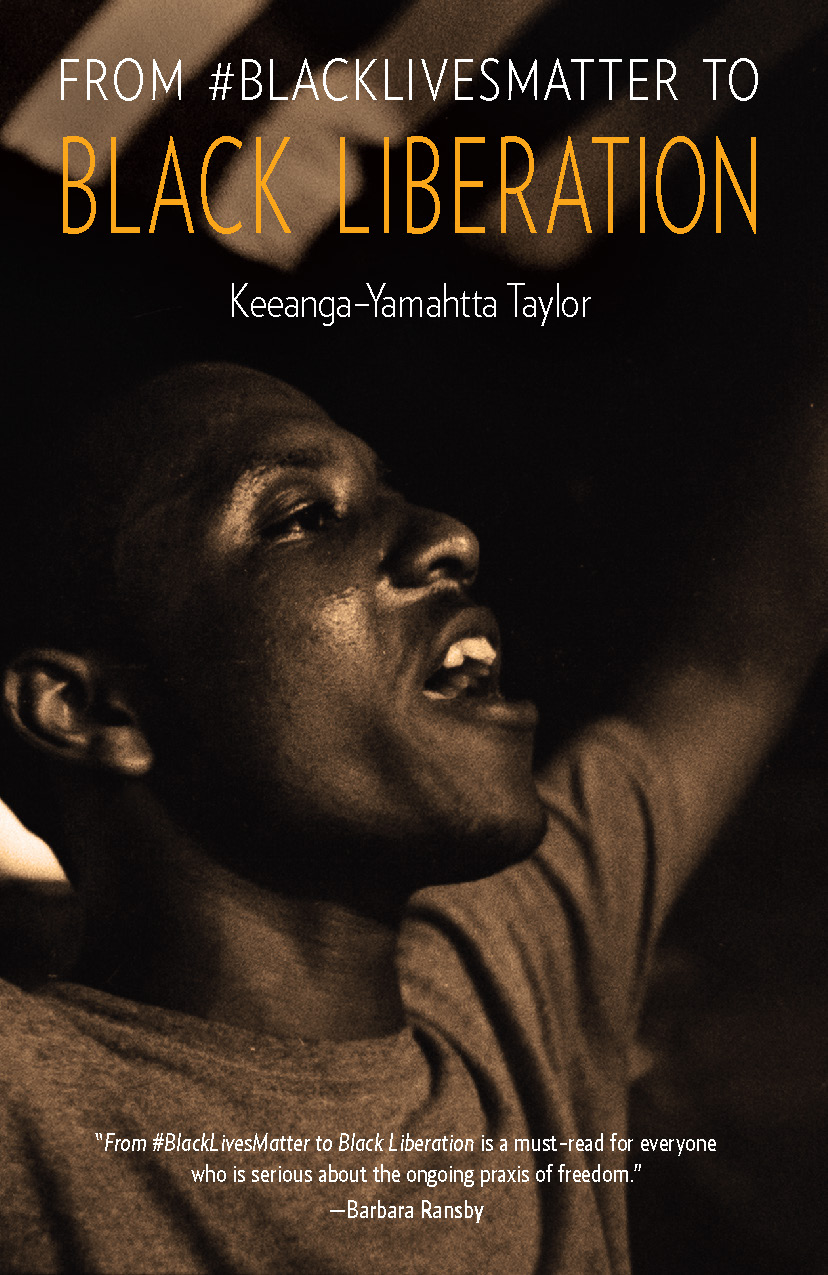
- Keeanga-Yamahtta Taylor, From #BlackLivesMatter to Black Liberation (2016) [available online via Falvey]
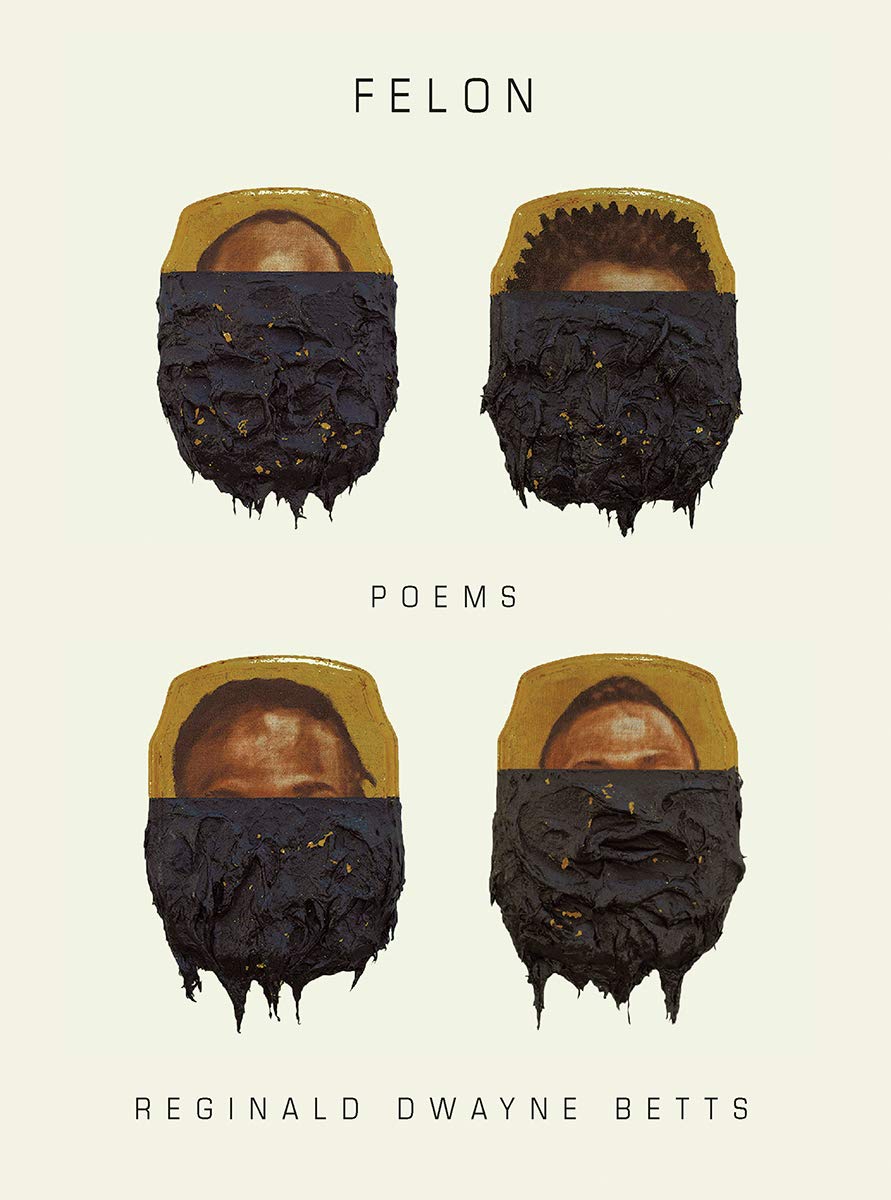
- Reginald Dwayne Betts, Felon: Poems (2019) -- Betts read at Villanova during the 2017 Literary Festival
Online Resources
On prisons, policing and punishment:
Breaking down the Prison Industrial Complex Video Project by Critical Resistance: http://criticalresistance.org/videoproject/
Reading Towards Abolition: A Reading List on Policing, Rebellion, and the Criminalization of Blackness:
“Geographies of Racial Capitalism” video and “Intercepted” podcast episode featuring Ruth Wilson Gilmore: https://www.youtube.com/watch?v=2CS627aKrJI
The #BlackCatholics Syllabus, curated by Dr. Tia Noelle Pratt: https://tiapratt.com/blackcatholicssyllabus-2/
And, to help make sense of all of this reading, a short essay, “What is an Anti-Racist Reading List For?” by Dr. Lauren Michele Jackson: https://www.vulture.com/2020/06/anti-racist-reading-lists-what-are-they-for.html
Thursday, May 28, 2020
Three English Majors Win Fulbright Grants
Please join us in congratulating graduating English majors Isabel Forward, Caleigh Manyak, and Clare Reckner, who have been awarded Fulbright US Student Grants for 2020-21.
Isabel Forward graduated this month with a double major in English and Secondary Education, with minors in Spanish, Peace and Justice, and Latin American Studies. She plans to spend her Fulbright year in Colombia working as an English teaching assistant. On her return she hopes to go to law school and pursue a career in domestic policy reform.
Caleigh Manyak was an English and Global Interdisciplinary Studies (GIS) major, with a concentration in Arab and Islamic Studies. She intends to spend working as an English teaching assistant in Brazil. She plans to go on to do a Master's degree in Education Policy.
Clare Reckner graduated this spring with a degree in English, with a concentration in Writing and Rhetoric, and a minor in Communication. She plans to spend her year working as an English teaching assistant in the Czech Republic. On her return she hopes to go to law school.
You can read more about this year's Fulbright award winners and learn how to apply yourself here.
Isabel Forward graduated this month with a double major in English and Secondary Education, with minors in Spanish, Peace and Justice, and Latin American Studies. She plans to spend her Fulbright year in Colombia working as an English teaching assistant. On her return she hopes to go to law school and pursue a career in domestic policy reform.
Caleigh Manyak was an English and Global Interdisciplinary Studies (GIS) major, with a concentration in Arab and Islamic Studies. She intends to spend working as an English teaching assistant in Brazil. She plans to go on to do a Master's degree in Education Policy.
Clare Reckner graduated this spring with a degree in English, with a concentration in Writing and Rhetoric, and a minor in Communication. She plans to spend her year working as an English teaching assistant in the Czech Republic. On her return she hopes to go to law school.
You can read more about this year's Fulbright award winners and learn how to apply yourself here.
Tuesday, May 12, 2020
English Faculty's 2020 Summer Reading Recommendations
Welcome to the faculty's seventh annual summer reading recommendations list! Once you've seen this one, you can click on the "summer reading" label at the end to see the previous ones.
ALAN DREW
First, I'm a sucker for the American West, especially since I've been living on the East Coast. Second, this debut novel from a small press was a finalist for the Pulitzer Prize and I've heard nothing but great things about it. Set in the mid-19th Century, Hakan, a young Swedish immigrant, gets separated from his older brother as they try to make their way to New York City. He boards the wrong ship and ends up in Gold Rush California, forcing him to travel east across the country, going against the tide of migration, in hopes of finding his brother.


CATHY VELEZ


YUMI LEE




JODY ROSS
I have two books lined up to read this summer, both easy reads: The Dutch House and The Miraculous Journey of Edward Tulane. My sister recommended The Dutch House by Ann Patchett it because it is set in suburban Philadelphia—in my neighborhood, in fact. I had never read Patchett before, but I ran across an article she wrote in the New York Times this spring about books to read “right now”—during the pandemic. She recommended a writer of books for younger readers, Kate DiCamillo: https://www.nytimes.com/2020/

ALAN DREW
First, I'm a sucker for the American West, especially since I've been living on the East Coast. Second, this debut novel from a small press was a finalist for the Pulitzer Prize and I've heard nothing but great things about it. Set in the mid-19th Century, Hakan, a young Swedish immigrant, gets separated from his older brother as they try to make their way to New York City. He boards the wrong ship and ends up in Gold Rush California, forcing him to travel east across the country, going against the tide of migration, in hopes of finding his brother.

ADRIENNE PERRY
This summer, I've decided to return to our bookshelves to find some neglected treasures. One book I'm looking forward to reading is M. F. K. Fisher's The Gastronomical Me. I'm not sure how much people read Fisher these days, but she's a phenomenal prose stylist and she's writing about food, so you can't really go wrong. And while they're not works of literature per se, I love reading cookbooks. Right now, I'm reading Deborah Madison's classic Vegetarian Cooking for Everyone, a book full of delicious recipes that have never let me down. If I can get my hands on some Edna Lewis cookbooks--The Taste of Country Cooking or In Pursuit of Flavor--I'll read those, too. Lewis is such a legend and I'd love to get to know her through her food.

TRAVIS FOSTER
I just started Swimming in the Dark by Tomasz Jedrowski. It’s set in early 1980s Communist Poland, and it’s about two men who fall in love after sharing a banned translation of James Baldwin’s Giovanni’s Room. I’m just two chapters in and so far it’s been tender and illuminating and heartbreaking in all the ways I’d hoped it would.
I loved Liz Moore’s crime novel, Long Bright River, which is largely set amidst the heroin epidemic in the Kensington neighborhood of Philadelphia. I couldn’t put it down not only for the layers of mystery but also for the humanity in Moore’s representation of a working class Irish Catholic family struggling to get by.
Jacqueline Woodson’s unbelievably good Red at the Bone is slim, yet somehow manages to convey several generations of a middle-class Black Brooklyn family so well I felt like I came to know them. It has some of the sharpest, funniest, cringiest, and truest scenes about falling in love during college that I’ve ever read. The audiobook for this one, featuring multiple performers for Woodson’s many narrators, was a particular treat.

CATHY VELEZ
Although I haven’t used it often in my 47 years of teaching existentialist literature, I suspect this might be a timely read for obvious reasons. I don’t expect to include the entire work in the fall but will certainly reference it.

MEGAN QUIGLEY
With homeschooling through July 4th and moving back across the Atlantic, I’m going to keep my goals for summer reading 2020 manageable. First, re-read On Being Ill by Virginia Woolf: It’s beautiful and powerful and casts light on Mrs. Dalloway and illness. Second, Hilary Mantel’s The Mirror and the Light to finish off the prize-winning trilogy! I’m also reading any novel (recent, old) where T. S. Eliot is a character. Finally, I’m trying to write, at least 250 words a day, on what it’s like to live through this pandemic. I find it grounding and I think will be useful in the future!

JEAN LUTES
This summer I plan to return to Juliana Spahr's This Connection of Everyone with Lungs (University of California, 2005), a book of poetry written in the wake of Sept. 11. Spahr meditates movingly on interconnections between the global and local, and as the consequences of our current pandemic continue to unfold, I have been reminded of her brave compassion and fierce truth-seeking. Warning: if you read this, be prepared to look up some historical details from the early 2000's about violence and conflict around the world. But it will be worth it, and you may even find some welcome distraction as you engage with a very different news cycle than the one we have at the moment.

TSERING WANGMO
I’m hoping to get to two novels and a book of poems I put aside to read last year and never got to reading. Kith, collection of poems by Divya Victor has been described by Amitava Kumar as “part-anthem, part-instruction manual, part-memoir, part-dictionary.” An Unnecessary Woman by Rabih Alameddine is a portrait of a reclusive translator in Beirut who, once a year, translates a favorite volume into Arabic but they’re only for herself. Temporary People by Deepak Unnikrishnan is described by the author as being “a work of fiction set in the UAE, where I was raised and where foreign nationals constitute over 80 percent of the population. It is a nation built by people who are eventually required to leave.”

YUMI LEE
This summer, I’m planning to escape into Victorian novels – the longer and juicier the better. I’ve already started Dickens’ Bleak House, and next up is Little Dorrit. After that, I might continue with more Dickens, or else try Thackeray’s Vanity Fair, which I’ve never read before, or reread Daniel Deronda, which I loved in college. As a bonus, I’m also excited to binge-watch the various TV and movie adaptations of these books after finishing! Looking forward to injecting both drama and costumes into my quarantine.

CATHY STAPLES
This summer I hope to read Elizabeth Lindsey Rogers’ The Tilt Torn Away from the Seasons a lyric poetry collection that “imagines a human mission to Mars, a consequence of our own planet’s devastation from climate change.” Also on the list is Nan Shepherd’s The Living Mountain, which I read about in Robert MacFarlane’s wonderful book Landmarks.

LISA SEWELL
I am starting off the summer reading Rachel Cusk’s Outline Trilogy. After that, I’m going to read Sadiya Hartmann’s Lose Your Mother: A Journey Along the Atlantic Slave Route and Brandon Shimoda’s The Grave on the Wall
For poetry, I’m starting off with Brian Teare’s Doomstead Days and Ilya Kaminsky’s Deaf Republic.

HEATHER HICKS
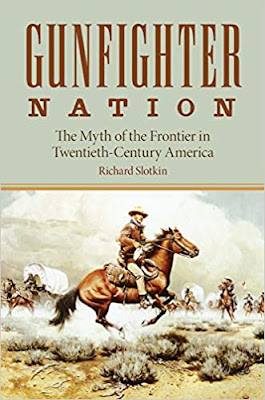
For fun this summer I hope to read the science fiction novels Ancillary Justice by Ann Leckie and The Three-Body Problem by Cixin Liu. I also intend to read Gunfighter Nation, the third book of Richard Slotkin’s landmark American Studies trilogy, which also includes Regeneration Through Violence and The Fatal Environment. These books trace the myth of the American frontier through American literature from the arrival of white settlers into the twentieth century. I’ve been reading Slotkin’s work in order to think about the role of frontier discourse in apocalyptic narrative.

BROOKE HUNTER
At the moment I find myself capable of dealing with only "mild peril" in the narratives I consume, so my recommendations have a heartwarming and escapist bent. Two of my recs are children's books by authors better known for other works. The first is Seacrow Island by Astrid Lindgren (famous for her Pippi Longstocking books). Seacrow Island relates the story of the Melkerson family, a widower and his four children, and their adventures on a small, sparsely populated island off the coast of mainland Sweden. The family spends the summer swimming in the Baltic sea, rowboating, and paling around with a huge, gentle Saint Bernard. As with much Nordic literature, Seacrow Island offers a nostalgic, melancholy twinge along with all the sunshine and fish. If you're wishing you could summer in a dilapidated cabin in the woods with your large boisterous family, while also yearning for time to yourself, this is the book for you! My second recommendation is The House of Arden by E. Nesbit (better known for Five Children and It) about Edwardian brother and sister, Edred and Elfrida, who travel through time with the help of an albino mouldiwarp: a good Middle English world for mole. The children attempt--and fail--to be good as they explore Arden castle, eat strange puddings, and visit other centuries in search of treasure. The gender politics and attitude towards the aristocracy are a bit old fashioned, but if you can get past that, the story is transporting. House of Arden also has a companion book, Harding's Luck, which is out of print but available as a free audiobook on Librivox. My final recommendation is Night and Day by Virginia Woolf a novel about young people breaking up, falling in love, and dedicating themselves to their work (Team Mary Datchet!). If you've never read any Virginia Woolf before, this is a good place to start! I first read this novel on my phone while commuting on the subway after a break up, so it's easy to pick up and put down. Night and Day is beautiful, atmospheric, and offers two great female characters taking different paths in their young adulthood.

EVAN RADCLIFFE
Middlemarch, by George Eliot (Mary Ann Evans), is a long novel, but this seems like a good time for a long novel, especially for a great one (and we’re also coming up on its 150th anniversary, since the first sections appeared in 1871). I first read it just after college; it didn’t grab me from the start, but after a little while I was immersed in its richly-portrayed and multi-faceted world. The book offers subtle studies of its characters, including Dorothea Brooke, the idealist who searches for a way in which a woman can make a difference; Lydgate, the doctor who thinks he can bring scientific progress to the town; Bulstrode, the Evangelical banker with a past; Mary Garth, the “plain” woman with two very different suitors; and the many others who can populate “a Study of Provincial Life,” as the novel is subtitled. It all comes together via Eliot’s distinctive narrative voice: disenchanted but also sympathetic and ultimately hopeful.

MARY MULLEN
I recommend Barbara Neely’s mysteries, featuring the one and only Blanche White. Detective fiction feels good to me right now—order amidst the chaos—and Barbara Neely writes detective fiction in a way that both gives order and questions the chaos of everyday, ‘normal’ life. These novels novels grow out of Neely’s work as an organizer and activist, and think about race, class, gender, and community.
I hope to read Saidiya Hartman’s Wayward Lives, Beautiful Experiments. I was lucky enough to hear her read from this book in Philadelphia this year, and have long been looking forward to reading it myself. As Keeanga-Yamahtta Taylor says in a review of the book: “She is ultimately interested in the multitude of ways that Black women ‘made a way out of no way,’ whether through flight, migration, work, sex, singing, dancing, screaming, and all of the social and cultural innovation born from pure defiance and a refusal to do what you are told.”

JODY ROSS
I have two books lined up to read this summer, both easy reads: The Dutch House and The Miraculous Journey of Edward Tulane. My sister recommended The Dutch House by Ann Patchett it because it is set in suburban Philadelphia—in my neighborhood, in fact. I had never read Patchett before, but I ran across an article she wrote in the New York Times this spring about books to read “right now”—during the pandemic. She recommended a writer of books for younger readers, Kate DiCamillo: https://www.nytimes.com/2020/

JOE DRURY
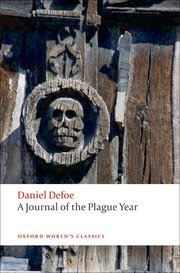
If you want to go in the opposite direction from escape and lean into the times that we're living through, then you might take a look Daniel Defoe's remarkable Journal of the Plague Year. This gripping, panoramic, half-journalistic, half-fictionalized account of the 1665 London plague outbreak was recently described by Nobel laureate Orhan Pamuk in the New York Times as "the single most illuminating work of literature ever written on contagion and human behavior." I just finished reading it with a group of colleagues from other universities and it was almost uncanny how much it resonated with events happening around the world today. It's all there: the panicking populace, the lockdowns, the empty streets, the conspiracy theories, the quack cures, the sudden mass unemployment, the exacerbating effects of poverty and inequality, and compelling depictions of the many forms of human irrationality as well as, more hopefully, resilience, resourcefulness, and solidarity that pestilence inspires.

Wednesday, May 6, 2020
Dr. Megan Quigley Checks in for the James Joyce Quarterly and Reads from Ulysses for the Rosenbach
Check out this video diary featuring Dr. Megan Quigley, currently on sabbatical in the UK, talking to the readers of the James Joyce Quarterly about how she is handling the COVID pandemic and how it has affected her thinking about her research.
After that, you can watch Dr. Quigley read a chapter from Joyce's Ulysses for the Rosenbach Museum's Every Day Reading Challenge.

After that, you can watch Dr. Quigley read a chapter from Joyce's Ulysses for the Rosenbach Museum's Every Day Reading Challenge.

Subscribe to:
Posts (Atom)