Welcome to the blog for the Villanova English department! Visit often for updates on department events, guest speakers, faculty and student accomplishments, and reviews and musings from professors and undergraduates alike.

Tuesday, September 7, 2021

All About the Bagels Coffee Hour, Thursday Sept. 9, 11:30 am-1:00 pm


Bagels! Coffee! Bananagrams! 

Join the English department (including THE Dr. Adrienne Perry of Bridges fame) for free wheat, caffeine and camaraderie on Thursday, Sept. 9 between 11:30 am and 1:00 pm in the SAC East Courtyard. English majors, minors and anyone interested in the English department welcome! Come and go as you like.

Thursday, September 2, 2021

BIPOC Writing Hangouts, every other Thursday from Sept. 9, 7:00 pm, Zoom

BIPOC Writing Hangouts begin on Thursday, September 9, at 7:00 pm on zoom. They will take place every other week. 

They provide a supportive and informal space for self-identified BIPOC students, alumni, faculty, and staff. Writing prompts provided. Email Prof. Tsering Wangmo Dhompa for details.


Thursday, August 26, 2021

English Department Picnic recap

The English Department Picnic was a success! No longer trapped in the black boxes of zoom, professor and students were able to talk face to face. First year students were able to see what the English department is all about. Dream courses were proposed, Harry Potter classes were discussed. Here are some of the highlights:


First year students with Dr. Brooke Hunter and Irish language fulbright, James O'Connell

The sun was shining on us

Big smiles!

Students check out the anti-social corner

Students welcome Dr. Kimberly Takahata to Villanova! She's teaching a course on American Literary Traditions #1, as well as a core literature and writing course on race and ethnicity in American literature this semester.

Getting some reading in at the anti-social corner


Monday, August 23, 2021

English Department Picnic: August 25

The English Department picnic is taking place this Wednesday, August 25th, from 4:30-6:30 at Professor Quigley’s house, which is a block away from campus on 232 Hilldale Road.  Come hang out with faculty and students and get free food and English Department swag!  If you plan to drop by, please RSVP by tomorrow, Monday, August 23rd at noon to Cindy Farrell at Cindy.Farrell@villanova.edu so we can buy enough food!


Wednesday, May 26, 2021

Villanova English Graduating Senior-Inspired Reading Recs!

This year the department did something a little different, and faculty members put their heads together to select books as gifts for our graduating seniors. These book selections were inspired by our graduating seniors' interests and tastes, but we hope they will provide useful summer reading suggestions for anyone who is looking for some good tips!


Amanda Atkinson was gifted a book by Evan Radcliffe

Circe by Madeline Miller 

Circe by Madeline Miller: Madeline Miller’s reimagining of the figure of Circe turns her from a side character into a hero in her own right, a hero who makes her own way in an ancient male world. In this novel, Circe tells her side of the story, giving a fresh perspective on a number of figures from classical literature as she asserts her own female power while contending with patriarchal and treacherous gods and mortals. In a paper on the Odyssey that drew on her interests in both Classics and Gender and Women’s Studies, Amanda explored what she called an ancient misogynistic society riddled with double standards; Circe aims in part to use story-telling to subvert those standards.


Madison Barber was gifted a book by Lisa Sewell and Tsering Wangmo Dhompa 

Birthplace with Buried Stones: Poems: Alexander, Meena: 9780810152397:  Amazon.com: Books 

Birthplace with Buried Stones by Meena Alexander: In Maddie’s stunning creative works on “home”, the everyday routines of a neighborhood––coffee on the porch, kids returning from school, the USPS delivery van, sunset­­––are figurations of knowledge about place, body, and language. I hope Alexander’s poems on physical dislocations, postcolonial memory, and personal geographies will keep Maddie company when she has to update her address again.


Kate Clawson was gifted a book by Jean Lutes

White Teeth by Zadie Smith 

White Teeth by Zadie Smith: This big sprawling novel with audacious plotting and gripping characters that tackles questions of race, immigration, technology and teeth will be perfect for Kate, a fantastic reader, skillful with parsing modernist styles and hyper-realism. Kate also just completed a capstone paper analyzing intersectional feminism and the limits of White feminism, and I think that Smith’s 2000 debut will provide further evidence for her claims.


Catherine Cook was gifted a book by Lauren Shohet

Amazon.com: Go, Went, Gone (9780811225946): Erpenbeck, Jenny, Bernofsky,  Susan: Books 

Go, Went, Gone by Jenny Erpenbeck: The compassionate, cosmopolitan characters remind me of Catherine. The legal and ethical questions of what it means to be a refugee or a citizen tie together law, reading, and community-- three things Catherine engages in such great constellations.


Joseph D'Antonio was gifted a book by Ellen Bonds

How I Learned What I Learned - Pittsburgh | Official Ticket Source |  O'Reilly Theater | Thu, Mar 5 - Sun, Apr 5, 2015 | Pittsburgh Public Theater 

How I Learned What I Learned by August Wilson: Joseph’s  paper, “Dimensions of Gender and Race in August Wilson’s Fences,” was particularly impressive.  He analyzed the intersections of gender and race within the play’s historical context, the 1950s-1960s.  He applied a gender reading of the play, synthesizing analyses from three scholarly articles to argue that “Wilson ​ utilizes the marriage of Troy and Rose Maxson to portray these [historical] conflicts of race and gender in society.”  So, I would like to share my love of August Wilson's work with Joe, who I know appreciates Wilson's work as well.


Erin Fabian was gifted a book by Lauren Shohet

his dark materials: Philip Pullman: 9781407135595: Amazon.com: Books 

His Dark Materials by Philip Pullman: Erin appreciates the genre of nuanced exegesis of theological and literary heritage undertaken through fantasy fiction. She’s positioned to engage the copious, multidisciplinary corpus this book mines.


Malik Fisher was gifted a book by Kamran Javadizadeh

The Book Of Delights by Ross Gay • Epilogue Books Chocolate Brews 

The Book of Delights by Ross Gay: One of the things I love about Ross Gay is how closely and obsessively (how lovingly, really) he pays attention to seemingly ordinary things--and then how he shows that they are portals to other worlds, deep histories, full of riches and meaning and insight. What I’ll remember most about my time with Malik in the classroom was his curiosity about poetry and his generosity and joy; I think he’ll find Ross Gay to be a beautiful guide to whatever comes next.


Charlie Gill was gifted a book by Alice Dailey

michel tournier - gemini - AbeBooks 

Gemini by Michel Tournier: What to choose for a student who has read everything--a student whom I count as one of my teachers?  A novel featuring the most exquisite description of garbage ever written in French (and then translated into English).  Charlie, you will revel in Gemini for all the reasons I have reveled in your career at Villanova: for its beauty and brilliance; its intensity, humor, and transgressions; its wisdom; its honesty and strangeness.  I only wish I could have you in another seminar to talk about it when you’re through.


Michael Keeley was gifted a book by Lauren Shohet

The Amazing Adventures of Kavalier & Clay by Michael Chabon 

The Amazing Adventures of Kavalier and Clay by Michael Chabon: Mike, I have chosen Michael Chabon’s, The Amazing Adventures of Kavalier & Clay. The novel’s explorations of making and unmaking worlds with different kinds of art speak to Mike’s intellectual energy, keen eye for media affordances, and infectious enthusiasm about good stories.


Valentina Lopez was gifted a book by Lauren Shohet

Orpheus Lost by Janette Turner Hospital 

Orpheus Lost by Janette Turner Hospital: The ways characters use myth, art, smarts, and love to connect across continents and generations dig deep into pain and come to some hopeful places. That’s a magical possibility to take with you from your Villanova English and Spanish studies as you move into the world.


Julia Mills was gifted a book by Megan Quigley

The Secret History - Wikipedia 

The Secret History by Donna Tartt: Unreliable narrators, untrustworthy friends, religious battles, mysterious murders and a devotion to education drive Tart’s cult favorite. [She also wrote The Gold Finch which is great, just not as great!]  I’d love to read Julia parse her way through the competing truths at work in The Secret History, as she has with so many books we’ve read together. I also know that she would teach it beautifully, as I’ve been fortunate to observe her do in our classes when she was a powerful TA.


Ashley Park was gifted a book by Alice Dailey
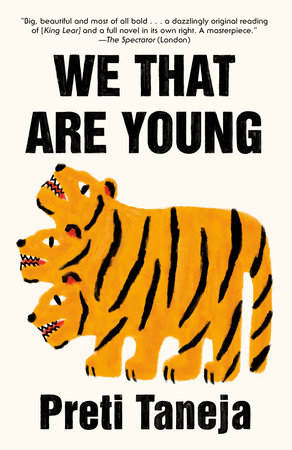
We That Are Young by Preti Taneja: 9780525563341 | PenguinRandomHouse.com:  Books 

We That Are Young by Preti Taneja: I have chosen Preti Taneja’s We That Are Young For a student who studied Shakespeare with me at the beginning of her Villanova education, I give you a different kind of Shakespeare at the end: a fierce, brilliant, feminist revisioning of King Lear set in contemporary India.  (This novel has the most astonishing description of garbage ever written in English; you may be starting to notice a pattern in my recommendations.) May Ashley, like Taneja, use your English education to tell the stories that most matter to her.


Shivani Patel was gifted a book by Lauren Shohet

Small Island by Andrea Levy 

Small Island by Andrea Levy: The complex shifting of fiction, truth, self-deception, self-revelation, and the dynamics of race, power, and coming into one’s own through and despite all of this, resonate with Shivani’s academic, vocational, and aesthetic passions.


Jessica Sardina was gifted a book by Joe Drury

A Visit to Don Otavio – New York Review Books 

A Visit to Don Otavio by Sybille Bedford: Jessie is heading for Mexico after she graduates and this is a book about a woman travelling to Mexico in the 1940s by one of my favourite authors. I think Jessie might find in this book much of her own wit, curiosity, and sense of adventure.


Jackie Soloman was gifted a book by Megan Quigley
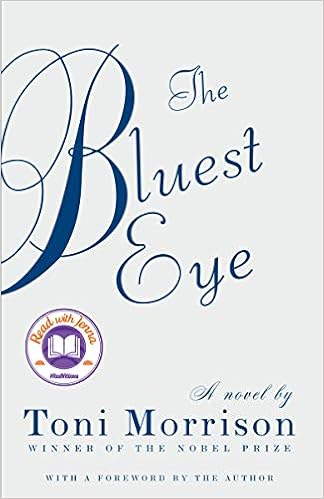
The Bluest Eye (Vintage International): Morrison, Toni: 9780307278449:  Amazon.com: Books 

The Bluest Eye by Toni Morrison: Beloved has captured Jackie’s imagination, as it has so many astute readers, inspiring her to tackle its themes in her writing for her capstone paper. While The Bluest Eye uncovers so much of the world’s ugliness and pain, it does so through Morrison’s exquisite, precise, and haunting language. The Breedloves and the MacTeers, literary descendents of Sethe, Paul D, and Denver, will intrigue Jackie with their challenges of northern migration and generational trauma. I hope the gift of both books inspires Jackie to read them all. 


Tileyna Zamorano-Gonzalez was gifted a book by Crystal Lucky

The Source of Self-Regard: Selected Essays, Speeches, and Meditations -  Kindle edition by Morrison, Toni. Literature & Fiction Kindle eBooks @  Amazon.com. 

The Source of Self-Regard by Toni Morrison: The late Nobel laureate reminds us that self-worth comes from a deep place of love and strength. As Tileyna ventures into the world beyond Villanova’s protection and support, Morrison’s sagacious words will remind her that she is enough and absolutely prepared for the challenges that lie ahead.

Friday, May 21, 2021

Villanova English Faculty's 2021 Summer Reading Recommendations

Welcome to the faculty's eighth annual summer reading recommendations list! Once you've explored this one, you can click on the "summer reading" label at the end to see the previous ones.

ALAN DREW


Since we've been mostly confined to our homes this last year, I'm in need of escape to start the summer.  I've surfed only a little, but I grew up body surfing in Southern California and have had a long running fantasy to travel the world, riding waves wherever you can catch them.  William Finnegan lived my fantasy, wrote a memoir about it, and won a Pulitzer for that memoir.  (I'm very jealous of him.)  I'll live vicariously through him and his book, at least for a few days.  


JOE DRURY

I'm currently about halfway through and very much enjoying Lost Children Archive by Valeria Luiselli, a kind of anti-Kerouac road trip novel about a journalist who sets off across the US with her husband and two children. Her husband wants to explore the history of the Apache, while she plans to search for two immigrant children who have gone missing at the southern border. Once I'm done with that, I will be picking up Mr. Fortune's Maggot by Sylvia Townsend Warner, a satirical novel about an English missionary on a remote volcanic island. The maggot in question is not a bug but "a whimsical or perverse fancy."


TRAVIS FOSTER

Stone Butch Blues by Leslie Feinberg. A stunning coming-of-age novel primarily about the experiences of queer people in the US from the 1940s through the 1970s. I read this almost a year ago and still think about the protagonist, Jess Goldberg, several times per week.


The Way of Thorn and Thunder by Daniel Heath Justice. An epic fantasy adventure that reimagines North America in the 18th and 19th centuries from the perspective of Cherokee people and history. It is a truly amazing novel with world building on a vast scale; multiple different cultures, all fully realized; unforgettable characters whose sexualities and genders far surpass any simple binaries; and a plot with the very highest of stakes. This one kept me up late into the night.


DAISY FRIED

Derrek Hines' contemporary retelling of Gilgamesh, the world's first book. In translation, Michel Houellebecq's controversial novel about French politics and ethnic/religious divisions, Submission.


KAREN GRAZIANO

This summer, I plan to revisit my legal roots: environmental law and policy. I've been exploring local parks and open spaces throughout the pandemic and thoroughly enjoying my frequent walks. You can expect to find me at one of my local parks this summer rereading Rachel Carson's classic Silent Spring that helped galvanize the environmental legal movement. Next, I'll be carried away to life on a Nebraska farm looking at the connections between agricultural and environmental policy, community and family, and business in Ted Genoways' This Blessed Earth: A Year in the Life of an American Family Farm. I'm looking forward to reading a book that plants "seeds of hope as the next generation prepares to inherit the family land and all of the joys and challenges that come with it," as Willie Nelson, president of Farm Aid, describes it. I want to become more aware of and appreciate what Tom Colicchio, chief and cofounder of Food Policy Action describes as "farming, family, and good" converging to show readers "what it takes to work on this blessed earth."


HEATHER HICKS


As I am always dipping into new fiction related to my scholarly interest in the apocalyptic tradition, I recently read Rumaan Alam’s 2020 novel Leave the World Behind.  This is a page-turner set in the Hamptons, which effectively intermingles class and racial politics with a looming sense of mystery and dread. 


JILL KARN

I plan to read War and Peace by Leo Tolstoy. I know, I know, it’s so incredibly long; but I like the idea of having a massive book to accompany me wherever I go this summer. It feels like a huge commitment to read this novel, and, truly, it’s a book I’ve always been meaning to read. Already, I’ve dipped into it and have been pleasantly surprised by its accessibility and richness. The characters—if you can keep track of who’s who—are fascinating and real. This book will be my companion on the train, on visits to family, on the beach. And if I want to hide behind it sometimes, that’s what one needs in the summer months too.


YUMI LEE

This summer, I’ll be reading The Essential June Jordan, just published this month. June Jordan is one of the great political poets of our time, and her work touches on so many of the issues that have been at the front of my mind this year: the violence of policing, the intersections of racism and sexism, how to be and act in solidarity with oppressed peoples the world over. Reading her work, I’m reminded that the struggles we’re engaged in today aren’t new by any means – a fact that’s depressing and enraging, and yet somehow oddly comforting to me at the same time. Jordan is at once a brilliant political thinker, an unswerving moral guide, and a genius of poetic language. (She also has amazing comic timing: as you read, you’ll be moved to tears and you’ll laugh out loud in the space of the same poem.) If you’ve never read her before, I highly recommend picking up this new collection.


CRYSTAL LUCKY

This summer, I am planning to read the debut novels of two immigrant writers, one old(er) and one brand new.  The first, Brown Girl, Brownstones (1959),  was the debut novel of the late Paule Marshall, novelist, short story writer, memoirist, and MacArthur “Genius Award” winner.  The coming-of-age novel reveals the inner workings of a close-knit community of immigrants from Barbados and their complex relationship with World War II era American society.  The second, Of Women and Salt (2021) by Gabriela Garcia, tells a transgenerational story of migration, addiction, betrayal, and perseverance.  I received the novel as a Mother’s Day gift and discovered it comes highly recommended by our colleague, Dr. Yumi Lee.


I also want to recommend Cicely Tyson’s Just As I Am: A Memoir (2020), which I just finished reading.  Released just days before the extraordinary actress’ passing at age 96, the autobiography is not only an engaging recounting of Tyson’s life, career, and long relationship with jazz trumpeter Miles Davis.  It deftly guides readers through the 20th and early 21st century -- the exciting days of Harlem in the 1920s, the Depression and Second World War, the Civil Rights Movement, the Age of Obama -- right up to our current Pandemic moment. I loved every page!


ADRIENNE PERRY

This summer I'm looking forward to setting up the hammock and spending many days reading a few of the books that friends and former students have given to me. The first is N.K. Jemisin's The Broken Earth trilogy. Each book in the series won a Hugo Award. (By the way, Jemisin won the Hugo three years in a row for these books!) I enjoy the immersive experience of reading science fiction and am eager to get to know about the people and land of Stillness. On the short story front, I'm looking forward to reading Kingdom's End, a Penguin Modern Classics edition of Saadat Hasan Manto's short stories, translated here from the Urdu by Khalid Hasan. Manto was a prolific writer who (apparently) revised little, and yet is considered "one of Urdu's great stylists." 


MEGAN QUIGLEY

Ulysses by James Joyce!

As I prepare to teach Ulysses on its 100th birthday next spring, I’m thinking about why this book matters still, from humanist, theoretical, religious and political perspectives. Some ideas though, maybe first you should read, “The Dead,” a short story from Dubliners, to get your Joyce feet wet. Then try out A Portrait of the Artist as a Young Man, if you are in the mood for a more Romantic story of young Stephen. But then, tackle the big blue book! Some suggestions: join an online reading group!  It’s more enjoyable with friends. Check out Robert Barry’s Ulysses Seen or the Joyce Project for a graphic novel or multimedia approach. Is it a book about a divided nation? About marriage? About the body? About the impossibility of writing a novel? Have fun….


EVAN RADCLIFFE

Alison Bechdel has just published a new book, The Secret to Superhuman Strength.  It’s a graphic memoir like her previous books Fun Home and Are You My Mother, but in this book you get not only Bechdel herself but also Romantic or Transcendentalist writers like Wordsworth, Coleridge, Emerson, and Margaret Fuller, who explored (as Bechdel puts it) “Self! Nature! Spirit!”  All that, and (in contrast to her earlier work, which is black-and-white with a single-color wash) colors too!  I’ll be reading it, and I also recommend a book I just finished listening to, Anna Burns’s 2018 novel Milkman, as read by Brid Brennan.  A lot depends on the distinctive language of the central character, who is also the narrator of the story; Brennan gives her a compelling voice that brings out her particular Irish tones and rhythms, and I loved listening to it.


LARA RUTHERFORD-MORRISON

My rec for summer reading is Madeline Miller's 2018 novel, Circe. Circe is a minor deity in Greek mythology, who is probably most famous for her role in Homer's Odyssey, in which she turns a bunch of sailors into pigs. Miller's version, told from Circe's point of view, recounts Circe's life from her childhood among the gods to her banishment on a remote island. It's a fun and extremely absorbing book; I loved it. If you're a fan of Greek mythology, you'll enjoy cameos from a variety of Greek gods and monsters and Miller's reimagining of a number of famous myths. 


LISA SEWELL

I am starting off the summer with Migrations, by Charlotte McConaghy. The novel is set in the near future, when global warming has wiped out the food and habitat for most animals and a majority are endangered or already extinct. It tells the story of Franny Stone, who travels to Greenland to follow the last Arctic terns in the world on what may be their final migration to Antarctica. Franny talks her way onto a fishing boat and the plot moves between her experiences with the motley crew on board the ship and her memories of her troubled past, which includes a passionate romance, missing parents and a violent crime. The New York Times describes it as a reimagining of Moby Dick. It’s beautifully written (though she’s no Melville), an ode to a disappearing world, but it’s also a page-turner, so a good, though depressing, summer read. Other books on my list include Brenda Hillman’s book of poetry, Seasonal Works with Letters on Fire, the final book in her tetralogy on earth, air, water and fire and Cathy Park Hong’s essay collection/memoir, Minor Feelings, which is apparently being made into a TV show.


LAUREN SHOHET

First, my senior seminar students chose for our class Margaret Atwood's novel Hagseed, which adapts Shakespeare's Tempest, setting it in a prison. It's an engaging read on its own terms, and offers some interesting ways to think about the Tempest as well. Second, I plan to read Maggie O'Farrell's Hamnet, a novel about the death of the historical Shakespeare's son. Third, I recommend Nina MacLaughlin's Wake, Siren: Ovid Resung, which offers a range of feminist voices retelling the tales from Ovid's Metamorphosis (many of which concern sexual violence).


TSERING WANGMO

I've been thinking about form a lot lately, and about Carmen Maria Machado's work. A while back responding to a question about genre and her use of form in her stories, Machado said something about how she thinks of the world as a "liminal fantasy", and how she's interested in messing with genre. I'm returning to Her Body and Other Parties, for form and for the stories she tells. Her recent memoir In the Dream House was among books removed from school reading lists by Leander Independent School District in Leander, Texas, partly because of parents who opposed including LGBTQ+ books on the reading list. In the Dream House is on my reading list.

Last summer I said I was going to read An Unnecessary Woman by Rabih Alameddine, and I did not read it. The novel is a portrait of a reclusive translator in Beirut who, once a year, translates a favorite volume into Arabic but they’re only for herself. I hope to get to it this summer. 


Monday, May 17, 2021

Just Published! Dr. Jean Lutes on Alice Dunbar-Nelson's "His Heart's Desire"

Congratulations to Dr. Jean Lutes, whose article, "A Queer Tale of Two Endings: Alice Dunbar-Nelson and 'His Heart's Desire,'" was just published in J19, a scholarly journal for nineteenth-century Americanists.

Combining archival research with childhood and Queer studies, Dr. Lutes's essay analyzes multiple versions of "His Heart's Desire," an extraordinary but little-known short story by Alice Dunbar-Nelson about a racially unmarked boy who wants a blonde, blue-eyed doll. While the story was originally meant to be part of a never-finished story collection, it has seen print separately in two different versions, one published during Dunbar-Nelson's lifetime and one posthumously. In this essay, Dr. Lutes argue that the story's two published versions, when read together, make a devastating case for the damage wrought by global imperialism and its fetishizing of white femininity. Dr. Lutes's comparative textual study also indicates Dunbar-Nelson may have engaged in savvy self-censorship that ultimately contributed to her relative obscurity in the current day, even among scholars of African American studies and Queer studies.

Be sure to check out Dr. Lutes's acknowledgments, which names the team of six students, undergraduate and graduate, who helped her with this project: Gia Beaton, Michael DeAngelo, John Flynn, Lucy Mileto, Elena Patton, and Jackie Solomon.