Welcome to the blog for the Villanova English department! Visit often for updates on department events, guest speakers, faculty and student accomplishments, and reviews and musings from professors and undergraduates alike.

Showing posts with label courses. Show all posts

Thursday, February 12, 2026

Sneak Peek! Fall 2026 Upper-Level English Courses

We hope to see you in some of these exciting courses in the fall:

Fall 2026 UPPER-LEVEL ENGLISH COURSES

2003 Intro to Creative Writing TR 8:30-9:45, Tsering Wangmo
Designed for students who wish to experiment with composing several kinds of creative writing: short fiction, creative nonfiction, and poetry.

2005 Writing the Short Story MW 3:20-4:35, Alan Drew
In this writing workshop course, we will explore setting, point of view, characterization, plot and other craft elements that make short stories run. We will read influential authors and give feedback to one another to foster our growth as writers.

2006 Writing of Poetry TR 4:00-5:15
Instruction in poetry writing, including how to craft imagery, figurative language, sound, line, and rhythm, as well as traditional and contemporary forms. Students read widely and write lyric, narrative and experimental poems that are shared in a supportive workshop setting.

2017 Writing Detective Fiction MW 1:55-3:10, Alan Drew
Do you love detective fiction? Have you always wanted to write your own "whodunit?" In this course, you'll read and analyze classic and contemporary detective fiction while working to produce, workshop, and polish your own creative work.

2018 Nature Writing Workshop TR 11:30-12:45, Cathy Staples
The natural world will be a source for the creative non-fiction, poetry, and fiction pieces students will write in this class. Through readings, field trips, writing exercises, and workshops students will learn to sharpen their language and see more deeply.

2020 Digital Journalism MWF 10:40-11:30, Lara Rutherford-Morrison
Introduces students to the fundamentals of journalism, with an emphasis on digital media. Class will focus on the ins and outs of digital journalism as a practice, with students gaining hands-on experience within a variety of media platforms.

2061 Editing & Publishing MWF 12:50-1:40, Adrienne Perry
Literary publishing in a diverse, compelling field involving both art and commerce. This hands- on class explores the economic, social, and artistic forces that shape contemporary literature. Grapple with what it means to "make culture" while honing editorial skills.

2250, Ways of Reading TR 10:00-11:15, Michael Dowdy
An exploration of how we engage, understand, explicate, and enjoy texts of all sorts.

2306 Harry Potter: Quests/Questions MWF 10:40-11:30, Evan Radcliffe
In this course we will use the tools of literary analysis to discuss all seven Harry Potter novels. Central topics will include how the series evolves; Rowling’s use of novelistic form, character and characterization, and literary models; and the books’ representations of gender, class, and other social issues.

2790 Rewriting Genres of White Supremacy TR 2:30-3:45, Mary Mullen
"Rewriting Genres of White Supremacy" centers literature by Indigenous, Black, and white American writers to consider some of the most pressing concerns of our contemporary moment. Alongside visual images, historically grounded modules on the construction of race, and a critical dialogic component, the course supports all students in their exploration of racial and social hierarchies through the powerful expressions of key nineteenth, twentieth and twenty-first century writers, including Leslie Marman Silko, James Baldwin, Toni Morrison, and Herman Melville.

2991 English Majors in the Workplace M 3:20-4:35 for first 10 weeks of the semester, Michelle Filling-Brown
This course supports students in thinking critically about their identities and goals within the field of English while deepening their understanding of the diverse career and post-baccalaureate options available to English majors. Students will develop practical skills such as résumé writing, cover letter preparation, and interviewing strategies.
Note: this is a one-credit course.

3001 Foundational Literature in English 1 TR 11:30-12:45, Lauren Shohet
Influential British literature from beginnings to 1750, tracing key ideas, power relations, and genres that still impact literature in English, and Anglophone culture, today. Relationships between writing and political change, media history, gender, spirituality, the environment, oppression and liberation.

3150 Chaucer TR 1:00-2:15, Brooke Hunter
This course introduces the work of Geoffrey Chaucer through a reading of his lively collection of stories and storytellers, The Canterbury Tales. Through its devout stories, explicit comedies, and probing romances, we will explore medieval society, Chaucer's insights on subjectivity, and influential medieval genres.

3650 African Drama MW 4:45-6:00, Chiji Akoma
Examination of the aesthetics, politics, and practices of the theatre and drama in Africa. Focused on written plays, course explores drama performances on stage, television, and movies. Introduces students to role-playing and small-scale adaptation of texts to American contexts.

4500 Black Atlantic MW 3:20-4:35, Travis Foster
Explore how the transatlantic slave trade reshaped Europe, Africa, and the Americas. This course analyzes Black diasporic culture and resistance—from 17th-century institutionalized culture and resistance—from 17th-century slavery and the Haitian Revolution to modern mass incarceration - using literature to revisit the silenced past.

4590 U.S. Independence at 250 TR 4:00-5:15, Kimberly Takahata
This class—held during a big birthday year for the United States—will examine US founding documents alongside historical contemporaries and recent rewritings of early American literature. We will ask: how does the United States and US writers define independence, and how have those definitions changed over time?

4642 Fictions of Motherhood TR 8:30-9:45, Jean Lutes
What power do mothers have? Who has the power to define motherhood? You will examine U.S. narratives of motherhood from the nineteenth century to the present, with special attention to definitions of reproductive justice.

4654 25 Poems TR 11:30-12:45, Kamran Javadizadeh
To be alive today is to feel distracted. This course offers us the chance to slow down. We read just one short poem per class meeting and learn how to give it our full attention, in writing and in conversation.

4651 Undocumented Americans TR 10:00-11:15, Tsering Wangmo
What does it mean to be "undocumented?" In this course, we will learn about belonging and citizenship from critical essays and memoirs written by "undocumented Americans."

5000 Climate Fiction TR 2:30-3:45, Heather Hicks
This course will examine critically acclaimed works of climate fiction, considering the major environmental challenges they identify, the literary forms they deploy, and the positive change they might bring about.

Thursday, September 18, 2025

Sneak Peek: Upper-Level English Courses to be Offered in Spring 2026

We hope you enjoy this sneak peek of upcoming English course offerings. We look forward to sharing more about these courses with you at the fall pre-registration reception on Friday, October 25th!

2003 Intro to Creative Writing TR 1:00-2:15, Alan Drew

Designed for students who wish to experiment with composing several kinds of creative writing: short fiction, creative nonfiction, and poetry.

2006 Writing of Poetry TR 8:30-9:45, Cathy Staples

Instruction in poetry writing, including how to craft imagery, figurative language, sound, line, and rhythm, as well as traditional and contemporary forms. Students read widely and write lyric, narrative and experimental poems that are shared in a supportive workshop setting.

2013 Writing of Memoir TR 11:30-12:45, Tsering Wangmo

Memoir is an opportunity to understand life. This writing workshop provides students with practical skills in reading and writing about the events, memories, places that inform their lives.

2023 Journalism MWF 12:50-1:40, Kate Szumanski

Introduces students to key techniques of news gathering and news writing. We will also explore the principles and rules that guide the writing of news pieces, editorials, and features.

2250 Ways of Reading TR 11:30-12:45, Kamran Javadizadeh

An exploration of how we engage, understand, explicate, and enjoy texts of all sorts.

2360 Adaptation: Film as Literature MW 1:00-2:15, Adrienne Perry

The relationship between movies and literature dates back to film's earliest days. Comparing films and texts allows for an explanation of storytelling and the fascinating choices auteurs make. Plot, tone, and symbolism are considered alongside questions of power and representation.

2994 Reading and Community T 6:00-7:15 for first 10 weeks of the semester, Mary Mullen

Studying the kind of reading that takes place outside of the classroom in book groups and community reads, this course practices reading in community while studying hot new books selected by students in the course. Please note: this is a one-credit course.

3350 Milton: Gender and Genre TR 10:00-11:15, Lauren Shohet

The writing of John Milton has fascinated and infuriated English-speaking people for 350 years. We explore why Milton's sometimes radical ideas about conscience, liberty, gender, and marriage remain influential, and how other writers (especially women) have responded to Milton.

3425 British Gothic Fiction TR 4:00-5:15, Joseph Drury

Traces the development of British gothic fiction from the late eighteenth century to today, exploring its themes of violence, sexuality, anxiety and social turmoil alongside its historical contexts and major theoretical approaches to understanding this genre.

3622 Virginia Woolf TR 2:30-3:45, Megan Quigley

Virginia Woolf, novelist, essayist, and diarist, is one of the most influential 20th-Century Writers. Woolf explores the self, modernity, depression, and the joy of an ardent feminist life. We will read Woolf's novels and contemporary debates about form, gender, and sexuality.

3660 Contemporary Literature & Film in India TR 2:30-3:45, Tsering Wangmo

India produces some of the most innovative and engrossing literature in the world, while also releasing more films than any other nation. Through both forms, we'll explore debates in contemporary India concerning border tensions, caste, gender, fantasy, and imperial histories.

4010 Early Textual Bodies MW 3:20-4:35, Kimberly Takahata

This course asks: how can we read about early American bodies, and how are bodies legible? We will chart how Indigenous, Black, and settler persons used developing forms and genres to navigate identity in texts from sixteenth- through nineteenth- century America.

4624 Crime Fiction and Gender MWF 9:35-10:25, Jean Lutes

This course studies crime and detective fiction as an intellectually rich phenomenon preoccupied by gender/sexuality. It examines how crime narratives from the nineteenth century to the present critique socioeconomic realities and address fundamental questions about the nature of knowledge.

4646 Race and Ethnicity: American Novel MW 4:45-6:00, Yumi Lee

This course examines a fascinating range of contemporary US literary texts to explore the ways that gender and sexuality intersect with race, class and other categories of identity to form our experiences of selfhood, community, national belonging, and power.

4702 Authors On & Off the Page TR 4:00-5:15, Alan Drew & Adrienne Perry

Do you love to write? Dream of visiting with authors to discuss their work and the publishing world? This course combines creative writing workshops with literary analysis and the chance to hob-nob with prestigious authors during the Villanova Literary Festival.

5000 Melville MW 1:55-3:10, Travis Foster

Encounter 19th-century America through its most challenging writer. From the high seas of Moby-Dick to the urban claustrophobia of “Bartleby” and the moral fog of Benito Cereno, we'll explore Melville’s prophetic visions and relentless critique of American exceptionalism. The course culminates with the somber poetic examination of the Civil War, Battle-Pieces, and an original research project positioning Melville as a vital voice on the nation’s ongoing crises.

5000 Adaptation: Page, Stage, Film TR 11:30-12:45, Lauren Shohet

How and why do artists recycle old stories? In this seminar, we’ll explore ways that inherited texts move into different media, settings, and contexts: myth into film, poem into novel, medieval Scotland into twentieth-century South Africa. Together, we will study some theories of adaptation (how is cultural adaptation like/unlike genetic evolution? Is the book always better than the movie?) and consider a variety of adaptive projects (the Coen brothers Odyssey movie O Brother, Where Art Thou; Nina MacLaughlin’s contemporary feminist retellings of Ovid; and a range of ways Macbeth has been retold on stage, screen, and page). For your capstone paper, each of you will revisit a text you’ve studied before (or always wanted to), then research and write about its afterlives (or its heritage).


Thursday, October 31, 2024

Ghostly Matters in the News

Professor Mary Mullen's Ghostly Matters class was recently featured on Villanova University's spotlight and on NBC 10


Thursday, October 24, 2024

WXVU’s David Szczepanski Transports Listeners to the Action

WXVU’s listeners instantly recognize the voice. David Szczepanski’s signature energy and expertise transport his audience from their cars or residence halls to the excitement on the field or court. You feel like you are there, part of the action, even if you couldn’t make it to the game.

Villanova junior and WXVU Sports Director David
Szczepanski visited Journals 2023 on Thursday, October 10
andshared his experiences as a student journalist
On Thursday, October 10, 2024, Szczepanski shared that infectious energy, reliable expertise, and journalism experiences at Villanova with students in Journalism 2023, a Fall 2024 course that meets on Tuesdays and Thursdays from 1 to 2:15 PM in Tolentine 405. 

A junior Communication major from the Port Richmond section of Philadelphia, Szczepanski serves as the Sports Director, Villanova Basketball/Football broadcaster, and Founder/Host of “Villanova Sports Talk” on WXVU 89.1 FM, Villanova’s student-run radio station, located on the second floor of Dougherty Hall.

Szczepanski’s deep commitment to his craft extends beyond WXVU’s airwaves. A self-proclaimed lover of talking, he serves as a Villanova Sports Network Broadcast Spotter and a Premium Services Host with the Philadelphia Phillies. He also founded the television station – HGPTV – at his high school, Holy Ghost Preparatory School in Bensalem, Pa. 

 “Going to games and covering sports,” Szczepanski asked, “could there be a better job?” Szczepanski loves traveling and exploring different cities, and his WXVU position allows him to scratch that itch. He travels extensively with teams to cover games, bringing that action to our earbuds. Most recently, Szczepanski has reported from Madison Square Garden in NYC and Stony Brook on Long Island.  

Whether he’s reporting from the sidelines, pre- or post-game, or providing play-by-play coverage – standing throughout the game – Szczepanski strives to truthfully represent what he’s seeing and hearing so that his listeners remain informed. Context is key, Szczepanski said. Reporting information accurately and positioning it in its proper context helps journalists build trust with their audience and sources. 


In addition, preparing for interviews in advance and asking smart questions helps student journalists develop their interviewing skills as they build rapport with sources.

 “Instead of saying, ‘The offense was terrible. What happened,?’ say, ‘Coach, the defense played extraordinarily well tonight, but what happened with the offense? What didn’t work tonight?’” Questions framed more positively generally solicit greater and more nuanced responses and exchanges, allowing a journalist to go deeper, Szczepanski said.

Coming in with a playful, unique question – not a gotcha question but an unexpected and fun question – often relaxes the person you’re interviewing. For example, Szczepanski’s go-to question – What’s your favorite cheesesteak in Philly? – disarms his subjects. They might even smile as they share their answer. 

For the record, Kyle Neptune, Head Men’s Basketball Coach at Villanova, doesn’t have a favorite cheesesteak spot, favoring an arguably healthier clean and grass-fed diet, because that is what the players eat, especially during the season, as revealed during a sit-down interview with Szczepanski. Completely fine – more Cheez Whiz for the rest of us.  

It’s important to remember that relationships between journalists and their sources are professional relationships, not personal ones. One of the many journalist responsibilities to their audiences is to ask tough, challenging questions to get to journalistic truth, and to be critical when appropriate. This gets complicated when the reporter and their sources are personally close. 

Public Relations and Journalism are distinct, Szczepanski said. “It seems like the two are confused or conflated at times. Public Relations is concerned with promoting an individual or an organization, and with communicating certain messages that make an individual or organization look good,” Szczepanski reminded us. “Journalism looks for the real story and the facts.” 

Active on social media, Szczepanski strives to share his reporting with a wider and wider audience in ways that they access information. Follow him here. And here. He’s also creating more and more videos, setting up his iPhone on an inexpensive tripod and reporting in video formats. Szczepanski, a one-person reporting/recording machine, seeks to develop his video production skills as he reaches broader audiences through this media. He’s doing it all, from producing the content to adjusting the lighting. 

According to its Web site, WXVU went on the air in 1991 when the Federal Communications Commission (FCC) granted an educational license to Villanova University. On August 24, 2022, WXVU began full-time FM operations for the first time in its history. WXVU now broadcasts on the 89.1 FM frequency 24 hours a day, 7 days a week.


Tune in and you’ll hear student DJs hosting music programs featuring multiple genres, from rock and pop to jazz, alternative, and country. On Fridays at 9 AM during the semester, you’ll hear “The Morning Roar,” the first morning show in the history of WXVU. Student hosts bring listeners the latest news, weather and sports, along with conversations with Villanova community members and newsmakers. 

You can listen on 89.1 FM, on the WXVU Web site, on the RadioFX app, or on-demand via the station’s podcast feed and YouTube channel.

Opportunities for Villanova students to get involved with media organizations on campus abound. VTV, the Villanovan, WXVU, Tech Crew, and the Belle Air Yearbook always need dedicated, reliable, and interested students who seek to inform our community as they strengthen their reporting, interviewing, writing, editing, and other journalistic skills. Contact these groups to learn more. 

--
Kate Szumanski, ’95, ’97, teaches Journalism 2023 through the English Department at Villanova University. She also serves as the Director of Professional Development and Internships in the College of Liberal Arts and Sciences at Villanova. Kate wrote this blog post with support from the great David Szczepanski, ’26.

Tuesday, April 2, 2024

Course Spotlight: Yumi Lee Teaches Villanova’s First Asian American Literature Course

By Katie Lewis

What does it mean to be Asian American?

This is the central question asked by Professor AJ Yumi Lee in a new English course as of Spring 2024, ENG 4649: Introduction to Asian American Literature. The course explores how literature has represented and shaped Asian American identity since the 20th century.


The course is the first course to be offered by the English Department that focuses entirely on Asian American literature.


“It has been really fun teaching this class, and the students have been really excited,” said Professor Lee. “I have to give a shout-out to the class of the College of Liberal Arts and Sciences dean's office. When I was developing the course, I was able to get a grant, since this is something that contributes to diversity efforts within the college. I definitely want to teach this class again and build off the conversations this semester.”


The beginning of the semester covered Asian American history, an area frequently underrecognized by American historical narratives. One crucial topic is the 1882 Chinese Exclusion Act, the first and only time in American history that an entire ethnic group was banned from becoming citizens.


“When teaching these texts, there are a lot of gaps in historical knowledge that we have to fill,” Professor Lee said. “Particularly in high school and even college-level American history classes, the Chinese Exclusion era is just a blip, if it’s even mentioned at all. But it’s an incredibly formative thing for Asian American communities. Historians talk about it as inventing the idea of the ‘illegal alien.’ So, we started the class delving into that history and the way the authors have engaged with it through the literary texts.”


Professor Lee started the semester’s readings with a contemporary short story, “Three Women of Chuck’s Donuts” (2020), by Cambodian American writer Anthony Veasna So.


“It’s about two teenage girls who work for their mom’s donut shop in California,” explained Professor Lee. “The story is very meta, because they’re sitting in the donut shop thinking about their own identities. I had assigned it thinking it would just be our intro text, but students actually keep coming back to it, and teaching it has given me a new love and appreciation.”


Although the category of Asian American literature emerged belatedly in the 1960s, the course moves through a 150-year history while exploring a variety of genres. Professor Lee incorporated novels, short stories, scholarly works, poetry, graphic novels, and films into the syllabus.


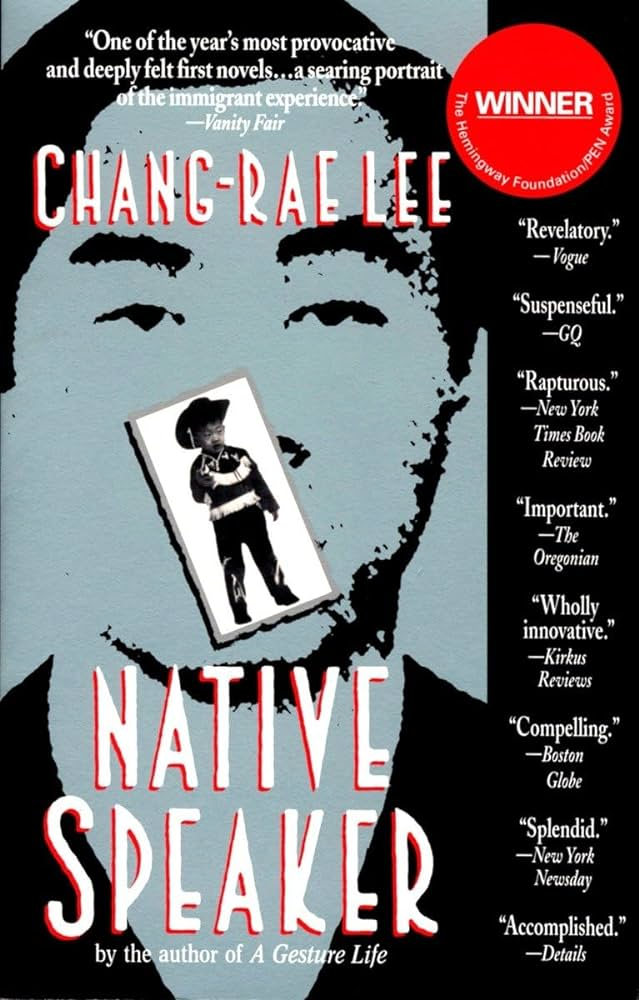
One of the main three novels in the course is Korean American writer Chang-rae Lee’s Native Speaker (1995).


Native Speaker inaugurated a new era of Asian American writing by second-generation authors who were probing issues like identity, family, and intergenerational trauma that we associate with Asian American narratives,” said Professor Lee. “Chang-rae Lee is such as a beautiful, lyrical writer, and the novel is just so smart. It was very cool to see how it resonated with a lot of students.”


Other works the class explores include Miné Okubo’s graphic novel Citizen 13660 (2014), selections from Jhumpa Lahiri’s Interpreter of Maladies (1999), and the Daniels’ film Everything Everywhere All at Once (2022).


Professor Lee encourages her students to lead class discussions and engage with their personal interests. With only 8.6% of Villanova students identifying as Asian as of Fall 2022, the course highlights the experiences of underrepresented ethnic groups through literature.


“There is growing interest in this field because students want to see themselves reflected in the curriculum,” said Professor Lee. “It’s also reflective of larger trends in academia. It’s exciting to be in this moment at Villanova that reflects what is happening nationally and especially on college campuses across the East Coast.” 


Legacies of Revenge: The Spanish Tragedy in Performance & Context

By Melody Gleason


Over the past two semesters, Dr. Dailey, Dr. Chelsea Phillips from the Theater department, and a group of students from various programs and departments have been working together to examine the theme of revenge and justice as a tragic element. The first half of this project started as class in the fall 2023 semester called, Legacies of Revenge – Across Time, Space, Genre, & Media. The course engaged both graduate and undergraduate students from multiple disciplines including English majors, minors, and theatre majors. Students in the course studied narratives of revenge across a plethora of entertainment mediums: from classical drama, to contemporary fiction, to modern film. The class especially focused on the play, The Spanish Tragedy written in the 1580s. 

Dr. Dailey describes The Spanish Tragedy as “the precursor to Hamlet and to a whole extensive revenge tragedy genre that enters the Elizabethan Theater scene through the Spanish tragedies. So it’s an enormously influential, important play, but it’s very rarely performed. 

 Lucky for us, The Spanish Tragedy is being put on here at Villanova this April! This is a once in a lifetime opportunity to see an incredible work of tragic drama put on by your peers, colleagues, and friends at Villanova. This is Dr. Dailey’s fourth collaborative production at Villanova but her first full-on theatrical production within the theater department. It also serves as an honorary second part to the fall course, as most of the students are now helping to put on this production. Many different people from different areas of Villanova are coming together to work on this project. 

Dr. Dailey notes, “I think part of what’s been really cool about it is that we have a lot of skill sets represented and a lot of different kinds of creativity, different ranges of experience, but I think it’s very clear to the cast that we need everybody and that the show is dependent on the skills of a range of people. What has been conveyed to us is that it’s kind of bringing people together in an exciting way and helping them to appreciate what these other populations of people at Villanova have to offer.” 

This interdisciplinary approach is one of the greatest aspects of the production as not many other academic and creative endeavors on campus provide such an opportunity to work with others outside of your field of study.

Sam Phillips, an English MA student said, “I feel like all education should be like that. Not a lot of people fully experience it, but I think one of the things that's important about literature studies, especially as they keep getting put into question, what is English and how do how do English studies stay alive is: who do you have to talk to? and where does that go? And a lot of that has to do with also the same questions that theaters are asking: how do we stay alive? How do we get money? How do we get people? And the sensationalization, the bringing together different voices, this kind of collaborative nature is the root of art that seems to get forgotten about.” 

So what exactly is the play about? Villanova’s Theatre website reads:

“Before Game of Thrones, before Kill Bill, before Carrie – even before Hamlet – there was The Spanish Tragedy, the great-granddaddy of modern revenge tales. Deprived of justice for the murder of his son, the loyal courtier Hieronimo abandons legal redress and, joined by the canny and resolute Bel-Imperia, sets out to seek blood for blood. With its intricate plotting and bold theatricality, Thomas Kyd’s timeless tragedy speaks to our present moment with its unflinching look at judicial inequity, legacies of violence and the all-too-persistent seduction of vengeance.” 

The Spanish tragedy merges some classical dramatic material, Senecan tragedy, and that kind of material where plots are ignited by these extended revenge cycles. It's a place where a bunch of those things come together with a ghost and kind of give birth to, on the Elizabethan stage, something like the ghost of Hamlet's father. The Spanish tragedy introduces revenge as a tragic motive. 

If you’re not a fan of classical drama, don’t let that deter you. 

“There’s some contemporary influence and we’re not making it super faithful to the period which I like. I think it's going to be an interesting artistic creation as a whole, not just like going to an old play” - Anabella Norlund, English MA student. 

Overall, as English MA student Mahtab Chaudhry tells us, it is a “very fun, very violent, very bloody,” and significant piece of early 16th century drama that should be fun to see. 

You can read more about the production and get your tickets now at this link! Tickets are already going quickly so get them while you can!


Tuesday, October 17, 2023

Introduction to Asian American Literature Course!

 This spring, Professor Yumi Lee will be teaching a new course, Asian American Literature. See the poster:


Sunday, March 19, 2023

Professors Alice Dailey and Chelsea Phillips win GRASP award: “The Spanish Tragedy: Artist Residency and Archive”

Professors Alice Dailey and Chelsea Phillips (Department of Theater) won a $15,000 Grant for Researchers for Arts and Sciences Professors from the College of Arts and Sciences to support a year-long exploration of The Spanish Tragedy.  Specifically, the grant will enable them to have a guest artist in residence next year and to archive the work generated by the project.  Students can participate in this project by taking the fall course, English 3260-H01 Legacies of Revenge in Drama, Fiction, Comics, and Film, and the corresponding spring course which will stage the play. Students are not required to take both fall and spring courses, but it is encouraged.


From the successful grant application:

As the play that introduced revenge as a tragic motive to the Renaissance stage, The Spanish Tragedy has had an enormous influence on the representation of revenge in the anglophile tradition, an influence that stretches from Shakespeare’s Hamlet (c. 1600) to contemporary comic books and television epics such as Game of Thrones (2011-19).  It is often studied, but for both stylistic and technical reasons, it is infrequently staged.  This means that opportunities to examine The Spanish Tragedy as a fully-fledged piece of theater—as a play being played, embodied by actors and spoken aloud in Kyd’s iambic pentameter, the verse form that would go on to become the indelible rhythm of Shakespearean drama—are exceedingly rare.  On the one hand, this makes our staging of particular interest to a large community both on campus and off.  Villanova community members who are familiar with the play—from Father Peter to Theater faculty and students to our undergraduate theater groups—have responded with overwhelming enthusiasm about our producing it here at Villanova, and colleagues in English and Theater from area universities and beyond are excited for the opportunity that our production will create to study this play “on its feet.”  On the other hand, it means we are entering relatively uncharted territory.  One can find any number of book-length studies on how to perform Shakespeare’s works; there are only a handful of essays on performing those of Thomas Kyd.

The Spanish Tragedy, like other plays of its era, is written in iambic pentameter, a metrical structure that demands greater breath support and control than everyday speech and that requires time in rehearsal to understand and execute.  The play also employs oratorical strategies that were taught in 16th-century English grammar schools and universities, such as formal rhetorical figures, Latin quotation, and classical allusions, all of which contribute to the generation of character and meaning.  Understanding and using these features of the language will be key to performing the play successfully.  The fall undergraduate and graduate courses, which will form the conventional academic foundation for the project, will explore the play’s literary background—its roots in Senecan tragedy and its direct descendants in English Renaissance drama—as well as its cognates in contemporary culture, including literature, art, television, and film. Students will use this background to edit the text of The Spanish Tragedy for performance and to propose production designs for various components of the play. 

            In short, the fall will prepare enrolled students to understand the play intellectually. As we move into the rehearsal process, however, it will be necessary to translate that understanding into embodied mastery of the language and story.  To do this, we propose the same model theater workers have used for centuries, including during the English Renaissance: apprenticeship with a senior artist.  We propose an artistic residency for an experienced performer who has not only acted in every play in the Shakespearean canon but also, crucially, in the plays of many of his contemporaries.  The residency will take place in spring 2024, offering invaluable embodied, performance-based knowledge of English Renaissance plays to our students during rehearsal.

Tuesday, December 13, 2022

Modernism and Fanfiction

Students in Dr. Quigley's Modernism and fanfiction class wrapped up the semester brainstorming final project ideas and drinking hot cider around the fire (with Major, the dog). Who knew one class could end with final papers on Henry James, Taylor Swift, T.S. Eliot and Startrek? 


Monday, December 5, 2022

Photos of Nature Writing Workshop with Owls at Rushton Farm

Professor Cathy Staples's Nature Writing Workshop also took a trip to Rushton Farm to see owls. Take a look at photos from their experience below.


Monday, March 14, 2022

Pre-Registration Reception Recap & Fall 2022 Course booklet

A fun time was had by all at the pre-registration reception. Check out the course booklet for fall 2022 courses and stay tuned for more English department events! 

Professor Alan Drew and Professor Chiji Akoma

A great group of students

listening to presentations about new courses

more listening

The people who make it all possible: Thank you Professor Heather Hicks, Mike Malloy, and Amanda Eliades

Professor Joe Drury explains his new course--"Strange Cases"

The one and only Karina Zakarian discusses her legal internship

Saturday, February 19, 2022

Information about the English major

Members of the student advisory committee will soon visit core writing and ACS courses to talk to students about the English major. They'll discuss their experience as an English major, answer questions, and share information.  Here are some of the relevant handouts that they will provide:

Why Major in English

Why Minor in English

How Creative Writers Can Benefit from the English Major

How Does the Villanova English Department prepare its majors for Careers?

Internships in English

English Courses and the Workplace

Careers for English Majors


Monday, February 7, 2022

Sneak peek: fall 2022 courses!

See the wide-ranging English courses we’ll be offering in the fall, along with information about course time and instructor!  We’ll be providing fuller descriptions and information on course attributes closer to Registration time.  Since this is a preliminary schedule, keep in mind there may be still be a few modifications. For now, if you have any questions, please contact your English advisor or drop Dr. Hicks an email.


Monday, January 31, 2022

Bridges, Winter 2022 out now!

The new issue of Bridges, the product of Dr. Adrienne Perry and her students in Editing and Publishing is out now.

Editorial Staff/New Book Reviews: Elizabeth Nación, Donovan Hill, Chloe Cherry, Autumn Anderson, Juliana Peri, Adrianna Ogando, Grace Kully, Ava Lundell, Patrick Leggett, Sara Hecht, Caroline Schroder, Catherine Wood, Katie Reed, Billy Lay, Alex Marino (forthcoming). 

New Poetry: Caroline M. Mar, Kamakshi Ranjan, and Sonam Tsomo Chashutsang

New Prose: Kai da Luz


The Editor's Note:

Yesterday was a full moon, the first of 2022.

A dear friend who splits her time between Minnesota and Sweden wrote that Stockholm was empty today. Was it the full moon, she wondered, or was everyone in hiding—not just from the cold, but from the newest COVID-19 surge? On the phone with another friend recently, they dubbed 2022 the “junior year of the pandemic.” This winter, as the wind howls and the temperatures drop, as we check the number of cases in our counties and lay low—or maybe we don’t—it can be easy to forget that there are other meanings for surge.


What about a “powerful rush of an emotion or feeling?” A feeling like Black joy, maybe, that is fought hard for and nurtured in the face of chaos and uncertainty. Maybe that feeling is the love connecting two adult sisters in the review of Mary H. K. Choi's book Yolk. There may not be one word to describe the emotion that rushes through us as we watch a parent learning to write, practicing their alphabets, but Sonam Tsomo Chashutsang's poem “Unfinished” gets us closer. In this newest issue of Bridges there are floods of memory, the longing that characterizes nostalgia, and in Kamakshi Ranjan’s poem the warm buzz that accompanies coming home to our hive.


This issue reminds us of the need to reflect on how we label the world around us. As in Caroline M. Mar's poems, it invites us to consider naming and how the language we use demands definitions to come. "Slip knot," “good mothers,” “yonder,” or “interesting women.” Sometimes, like Kai da Luz, we have to conjure entirely new words (and worlds) because the ones we have just won’t do. At Bridges, we want to remember that reading is intimate because, like good conversation, it requires that we reach out in good faith and in anticipation of insight and connection. What about surge as the electricity of reading something that inspires or challenges? Another name for it could be connectivity, spark.


Monday, November 1, 2021

Spring 2022 English courses on Race and Social Justice

 As you think about registration, consider taking a course in the English department on race and social justice this spring!


Tuesday, September 21, 2021

Sneak Peek: Spring 2022 Upper-Level English classes

A sneak peek of the English courses offered this spring--so many great classes to choose from! All of them count toward your English major. While there may be some changes before registration, this sneak peak gives you a chance to see your options. If you have questions, get in touch with your advisor or the English department chair, Dr. Heather Hicks.

Alice is into sneak peeks


Monday, May 17, 2021

2021 Department Awards Ceremony

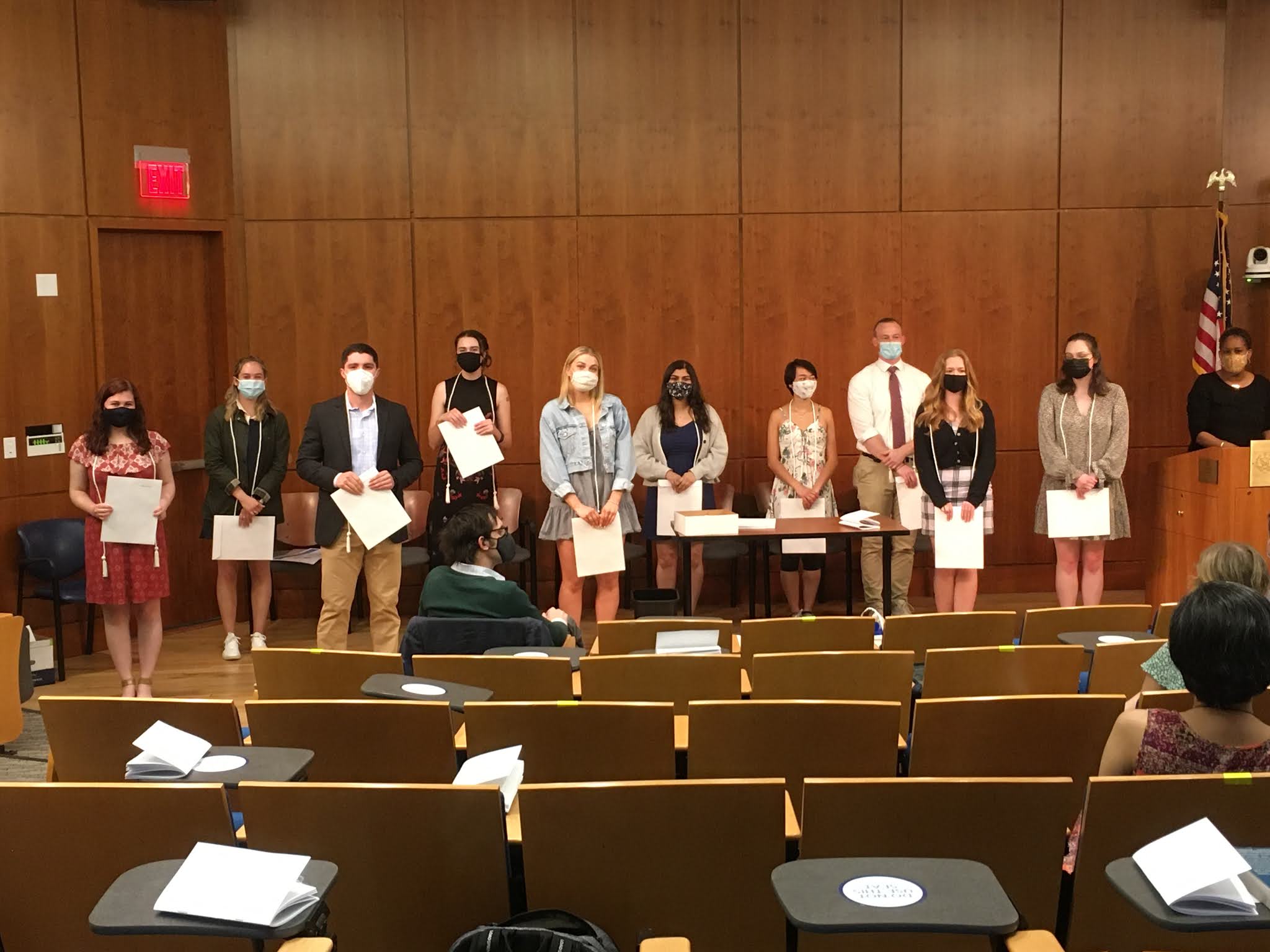
On April 30, the department held its annual awards ceremony to celebrate the members of our 2021 English Honor Society, the winners of our creative writing and essay awards, and the winner of this year's Medallion of Excellence. The event was supposed to be held in the Driscoll Tent, but high winds meant we had to move the event indoors at the last minute to the Driscoll Auditorium!

Congratulations, first of all, to the 2021 English Honor Society (see below, left to right): Amanda Atkinson, Catherine Cook, Joe D'Antonio, Erin Fabian, Julia Mills, Julia Mills, Shavani Patel, Jessie Sardina, Dom Sceski, Julia Valenti, and Jackie Solomon. Also honored, but not pictured: Jamie McClelland and Ashley Park.

The winner of this year's Core English Literature and Writing Seminar Prize, for the most distinguished scholarly or critical essay written for a Core Seminar in 2020 was Walter McDonald, for his essay, "Female Independence Challenging Social Norms" in Shirley Jackson's We Have Always Lived in the Castle. Walter's essay was written for Dr. Ruth Anolik's Spring 2020 course on "The Cultural Uses of Horror and Terror."

The judges for this award were Dr. Joe Drury and Prof. Robert O'Neil.

There were two winners for this year's Jerome J. Fischer Memorial Award, for the most distinguished scholarly or critical essays written by undergraduate students for an English course in the last year: Julia Valenti and Lily Switka. 

Julia's essay, "Austen Adaptations and the 'Accomplished Woman," was written for Dr. Joe Drury's Fall 2020 Senior Seminar on "Jane Austen Then and Now." 

Lily's essay, "Unrealistic Expectations: Miltonic Marriage and the Fall," was written for Dr. Lauren Shohet's Fall 2020 course on "Milton."

Ava Lundell also received an honorable mention for her essay, "Intimacy in Lament for Art O'Leary," written for Dr. Joseph Lennon's Fall 2020 course on "Irish Epics, Visions, and Hauntings."

The winner of this year's Margaret Esmonde Powell Memorial Award for the most distinguished essay by a graduate student written for an English course was Anne Jones. Her essay, "The Vexed Position of the Black Secret-Bearer: Concealments and Revelations in Hannah Crafts' The Bondwoman's Narrative," was written for Dr. Travis Foster's Fall 2020 course, "American Fiction Before 1900."


The judges for the Fischer and Esmonde Awards were Dr. Joe Drury, Dr. Lauren Shohet, and Dr. Brooke Hunter.

The winner of this year's George D. Murphy Award in Poetry was Madison Barber (below, second from right).

The winner of the Creative Writing Program's Award in Prose was Ashley Oh for her work, "Letter" (second from left). Pictured with them are Dr. Cathy Staples (left) and Dr. Tsering Wangmo (right).

The judges for the two creative writing awards were Dr. Alan Drew, Dr. Lisa Sewell, Dr. Adrienne Perry, and Dr. Tsering Wangmo. This year's visiting judge was the poet and educator Airea D. Matthews.

Finally, the winner of the 2021 English Medallion of Excellence was Shivani Patel, pictured with English department chair, Dr. Heather Hicks.


Congratulations, everyone!