Welcome to the blog for the Villanova English department! Visit often for updates on department events, guest speakers, faculty and student accomplishments, and reviews and musings from professors and undergraduates alike.

Friday, April 5, 2024

Reading Books like Browsing Costco Aisles

Reading Books like Browsing Costco Aisles    

By Trinity Rogers, VU Class of 2024 and Research Fellow for the Taught by Literature Project

Three weeks ago, I had the opportunity to fly to Pasadena, California for the C19: The Society of Nineteenth Century Americanists Conference with the Taught by Literature Project, which is supported by the Idol Family Fellows Program of the McNulty Institute. Dr. Lutes and I flew to California together and met up with TBL's Co-Founders Dr. Brigitte Fielder and Denise Burgher. Since I joined the project in my sophomore year, I've only ever gotten to be with our whole team in-person once before, in 2022, so it’s always a pleasure to be able to see everyone. We attended different conference sessions on everything from "What's Next in Florida" to Dr. Fielder's very own "Methods for Unending History from William San Pascual Still’s Underground Rail Road (1872)" in which we were lucky enough to hear her sing! The conference, interestingly titled "The End", matched my own solemn emotions as I walked through different sessions. I've been a student fellow with TBL for over two years, and my first conference presentation ever was with them, and so was my last. Dr. Lutes, Denise, and I presented on a panel titled "Gen Z & C19: A Roundtable on Affirming Student Scholars" along with faculty from Haverford College, Queens College, The University of Delaware, University of Southern Indiana, and the University of Connecticut.   

I was surprised to see that I was the only student scholar on our panel, and a bit nervous that I would be the only representative of Gen Z. As it turns out, I was the only representative of Gen Z on the panel, but not in the room. I was pleasantly surprised to see Gen Z scholars in the room who gave head nods and quiet snaps of encouragement as I shared my points and answered questions. While I wouldn't ever want to be the only voice of a generation (entirely too much pressure), I did enjoy being able to share my own thoughts and ideas on how faculty can better support their Gen Z students in research and in and out of classrooms. I was just as excited to mix and mingle with other generations as well, both within the conference and on our expedition to San Diego to film the legendary Dr. Frances Smith Foster  

After about a three-hour long drive from Pasadena to San Diego at around six a.m., Denise, Dr. Lutes, and I arrived at the home of Dr. Frances Smith Foster. We were greeted first by a banner on her front door that read "RICKY'S HOUSE" and featured a portrait of her small, older, white dog, Ricky. When Dr. Foster opened the door, we were greeted both by her and the infamous Ricky. We were able to set up to film in under thirty minutes, and filmed Dr. Smith Foster reading an excerpt written by the (legendary) nineteenth-century writer and activist Frances Ellen Watkins Harper, with Ricky at her feet. Afterwards, Dr. Smith Foster answered some questions we had prepared, and she offered probably the best comparison I had heard in a while: "Approach anthologies, and all books really, as if you were at Costco. Try the samples, test it out first, but if it's not for you, then keep it pushing." This, I knew, was just one of the reasons she was incredibly legendary, and I felt honored to have met and spent time with her. I think everyone should approach books and experiences like Costco – take advantage of the opportunity to test it out before you buy it in bulk and commit to something you may not even enjoy.

Image Description: (from left to right) Dr. Amari Johnson, Myself, Dr. Frances Smith Foster, Caleb Lucky, and Darius Pickett. The filming team and myself with Dr. Frances Smith Foster. 

Image Description: (from left to right) Denise Burgher, Myself, Dr. Jean Lutes out to lunch after filming in San Diego. 

Image Description: Ricky sitting in on filming 

Image Description: (from left to right): Denise Burger, myself, Dr. Brigitte Fielder, and Dr. Jean Lutes on the last day of the C19 conference. 


Tuesday, April 2, 2024

Course Spotlight: Yumi Lee Teaches Villanova’s First Asian American Literature Course

By Katie Lewis

What does it mean to be Asian American?

This is the central question asked by Professor AJ Yumi Lee in a new English course as of Spring 2024, ENG 4649: Introduction to Asian American Literature. The course explores how literature has represented and shaped Asian American identity since the 20th century.


The course is the first course to be offered by the English Department that focuses entirely on Asian American literature.


“It has been really fun teaching this class, and the students have been really excited,” said Professor Lee. “I have to give a shout-out to the class of the College of Liberal Arts and Sciences dean's office. When I was developing the course, I was able to get a grant, since this is something that contributes to diversity efforts within the college. I definitely want to teach this class again and build off the conversations this semester.”


The beginning of the semester covered Asian American history, an area frequently underrecognized by American historical narratives. One crucial topic is the 1882 Chinese Exclusion Act, the first and only time in American history that an entire ethnic group was banned from becoming citizens.


“When teaching these texts, there are a lot of gaps in historical knowledge that we have to fill,” Professor Lee said. “Particularly in high school and even college-level American history classes, the Chinese Exclusion era is just a blip, if it’s even mentioned at all. But it’s an incredibly formative thing for Asian American communities. Historians talk about it as inventing the idea of the ‘illegal alien.’ So, we started the class delving into that history and the way the authors have engaged with it through the literary texts.”


Professor Lee started the semester’s readings with a contemporary short story, “Three Women of Chuck’s Donuts” (2020), by Cambodian American writer Anthony Veasna So.


“It’s about two teenage girls who work for their mom’s donut shop in California,” explained Professor Lee. “The story is very meta, because they’re sitting in the donut shop thinking about their own identities. I had assigned it thinking it would just be our intro text, but students actually keep coming back to it, and teaching it has given me a new love and appreciation.”


Although the category of Asian American literature emerged belatedly in the 1960s, the course moves through a 150-year history while exploring a variety of genres. Professor Lee incorporated novels, short stories, scholarly works, poetry, graphic novels, and films into the syllabus.


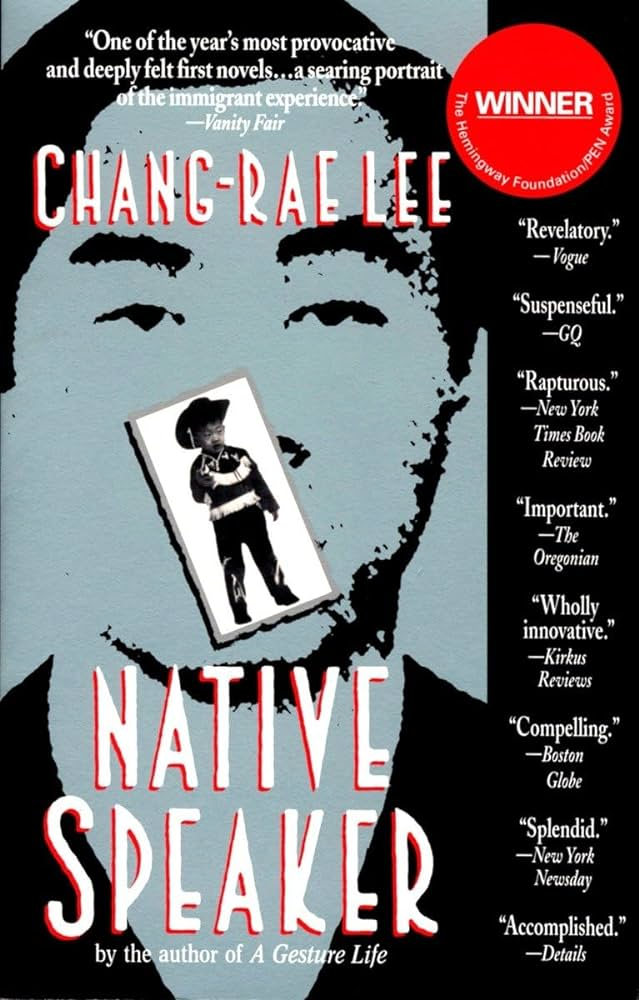
One of the main three novels in the course is Korean American writer Chang-rae Lee’s Native Speaker (1995).


Native Speaker inaugurated a new era of Asian American writing by second-generation authors who were probing issues like identity, family, and intergenerational trauma that we associate with Asian American narratives,” said Professor Lee. “Chang-rae Lee is such as a beautiful, lyrical writer, and the novel is just so smart. It was very cool to see how it resonated with a lot of students.”


Other works the class explores include Miné Okubo’s graphic novel Citizen 13660 (2014), selections from Jhumpa Lahiri’s Interpreter of Maladies (1999), and the Daniels’ film Everything Everywhere All at Once (2022).


Professor Lee encourages her students to lead class discussions and engage with their personal interests. With only 8.6% of Villanova students identifying as Asian as of Fall 2022, the course highlights the experiences of underrepresented ethnic groups through literature.


“There is growing interest in this field because students want to see themselves reflected in the curriculum,” said Professor Lee. “It’s also reflective of larger trends in academia. It’s exciting to be in this moment at Villanova that reflects what is happening nationally and especially on college campuses across the East Coast.” 


Honoring Margaret Powell Esmonde: Villanova English’s First Full-time Woman Professor (1974-1983)

By Melody Gleason

What better way to wrap up Women’s History Month than honoring Villanova English’s first full-time woman professor: Margaret Powell Esmonde? Margaret Powell Esmonde taught at Villanova from 1974 until her death in 1983. She was a specialist in Renaissance literature who also taught various courses in science fiction and children’s literature. Beyond her contributions to Villanova, Margaret Powell Esmonde was an active member of the Children’s Literature Association, working on the board and eventually serving as president from 1978-79. She was awarded various fellowships through this association, one in 1982 for a study of the role of girls and women in children's science fiction. Margaret Powell Esmonde’s impact remains for girls and women in the literary scene. The Villanova English Department continues to honor her legacy through the Margaret Powell Esmonde Memorial Award which is given annually to the most distinguished graduate essay written in a Villanova English course.

If you’d like to read more about Margaret Powell Esmonde, read this article published in the Children’s Literature Association Quarterly in 1983 commemorating her various accomplishments. 


Legacies of Revenge: The Spanish Tragedy in Performance & Context

By Melody Gleason


Over the past two semesters, Dr. Dailey, Dr. Chelsea Phillips from the Theater department, and a group of students from various programs and departments have been working together to examine the theme of revenge and justice as a tragic element. The first half of this project started as class in the fall 2023 semester called, Legacies of Revenge – Across Time, Space, Genre, & Media. The course engaged both graduate and undergraduate students from multiple disciplines including English majors, minors, and theatre majors. Students in the course studied narratives of revenge across a plethora of entertainment mediums: from classical drama, to contemporary fiction, to modern film. The class especially focused on the play, The Spanish Tragedy written in the 1580s. 

Dr. Dailey describes The Spanish Tragedy as “the precursor to Hamlet and to a whole extensive revenge tragedy genre that enters the Elizabethan Theater scene through the Spanish tragedies. So it’s an enormously influential, important play, but it’s very rarely performed. 

 Lucky for us, The Spanish Tragedy is being put on here at Villanova this April! This is a once in a lifetime opportunity to see an incredible work of tragic drama put on by your peers, colleagues, and friends at Villanova. This is Dr. Dailey’s fourth collaborative production at Villanova but her first full-on theatrical production within the theater department. It also serves as an honorary second part to the fall course, as most of the students are now helping to put on this production. Many different people from different areas of Villanova are coming together to work on this project. 

Dr. Dailey notes, “I think part of what’s been really cool about it is that we have a lot of skill sets represented and a lot of different kinds of creativity, different ranges of experience, but I think it’s very clear to the cast that we need everybody and that the show is dependent on the skills of a range of people. What has been conveyed to us is that it’s kind of bringing people together in an exciting way and helping them to appreciate what these other populations of people at Villanova have to offer.” 

This interdisciplinary approach is one of the greatest aspects of the production as not many other academic and creative endeavors on campus provide such an opportunity to work with others outside of your field of study.

Sam Phillips, an English MA student said, “I feel like all education should be like that. Not a lot of people fully experience it, but I think one of the things that's important about literature studies, especially as they keep getting put into question, what is English and how do how do English studies stay alive is: who do you have to talk to? and where does that go? And a lot of that has to do with also the same questions that theaters are asking: how do we stay alive? How do we get money? How do we get people? And the sensationalization, the bringing together different voices, this kind of collaborative nature is the root of art that seems to get forgotten about.” 

So what exactly is the play about? Villanova’s Theatre website reads:

“Before Game of Thrones, before Kill Bill, before Carrie – even before Hamlet – there was The Spanish Tragedy, the great-granddaddy of modern revenge tales. Deprived of justice for the murder of his son, the loyal courtier Hieronimo abandons legal redress and, joined by the canny and resolute Bel-Imperia, sets out to seek blood for blood. With its intricate plotting and bold theatricality, Thomas Kyd’s timeless tragedy speaks to our present moment with its unflinching look at judicial inequity, legacies of violence and the all-too-persistent seduction of vengeance.” 

The Spanish tragedy merges some classical dramatic material, Senecan tragedy, and that kind of material where plots are ignited by these extended revenge cycles. It's a place where a bunch of those things come together with a ghost and kind of give birth to, on the Elizabethan stage, something like the ghost of Hamlet's father. The Spanish tragedy introduces revenge as a tragic motive. 

If you’re not a fan of classical drama, don’t let that deter you. 

“There’s some contemporary influence and we’re not making it super faithful to the period which I like. I think it's going to be an interesting artistic creation as a whole, not just like going to an old play” - Anabella Norlund, English MA student. 

Overall, as English MA student Mahtab Chaudhry tells us, it is a “very fun, very violent, very bloody,” and significant piece of early 16th century drama that should be fun to see. 

You can read more about the production and get your tickets now at this link! Tickets are already going quickly so get them while you can!


Monday, April 1, 2024

The Tortured Poets (English) Department

 Check out this article about The Tortured Poets (English) Department event in The Villanovan. An excerpt from the article: 

"The ideas that were brought forth by students were fascinating to consider and often wove in previous projects of Swift’s to try and make sense of a larger narrative. The group determined that The Tortured Poets Department is likely to be a “break-up,” or heartbreak, album, and discussed at length other past songs that could give listeners an idea of what is to come. Starting with the new song titles, participants picked out “I Can Fix Him (No Really I Can)” and listed older songs they thought may connect in any way. On that list were “The Lakes,” “The Great War,” “Cardigan” and more.

Later, Swift’s brief message was also analyzed by the group. If one has seen the text, the allusions to war or violence become quite obvious. For example, Swift mentions a “tarnished coat of arms,” “loved bombs” and ends this missive with the (edited) immortal line of “All’s fair in love and poetry,” which many know to usually say “war” instead."